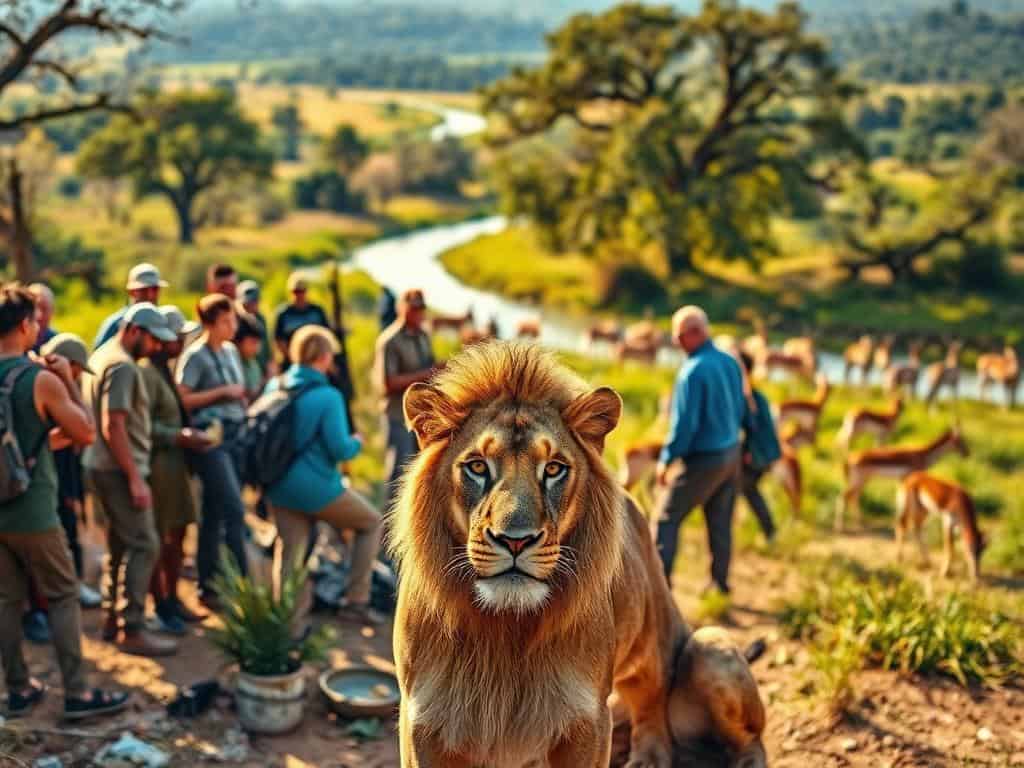
Did you know that about 1 million animal and plant species face extinction? This shows how urgent wildlife conservation is worldwide. It’s a great chance for people to volunteer abroad. By doing so, I can help make a difference and have an adventure with a purpose.
Organizations like International Volunteer HQ (IVHQ) have many programs. They range from animal shelters to marine conservation. With options in South America, Africa, and Europe all year, there are many ways to help. This guide will help me understand why wildlife conservation is important. It will also show how to pick the best program and prepare for my trip.
Key Takeaways
- Wildlife volunteering provides hands-on experience in conservation efforts.
- IVHQ offers over 30 programs across 22 destinations for animal volunteering.
- Volunteering abroad supports critical sustainability goals.
- Popular wildlife volunteering options include marine conservation and animal rescue.
- Choosing the right program involves considering ethical practices and program types.
- Preparation includes understanding health and safety considerations.
Understanding the Importance of Wildlife Volunteering
Wildlife conservation is now a must, not just a choice. Threats to animals and plants grow every day. By volunteering, I help support important conservation work that often lacks funds.
Why Wildlife Conservation Matters
About 1 million species are at risk of extinction due to habitat loss and human actions. This shows how vital wildlife conservation is. It helps protect endangered species and keeps ecosystems healthy. Volunteering helps me protect plants and animals and supports biodiversity, essential for our planet.
The Impact of Human Activity on Wildlife
Human actions like habitat destruction and pollution harm wildlife. The increase in human-wildlife conflicts makes things worse. By volunteering, I help protect habitats and support organizations working to protect them. This helps us all live together with wildlife.
Choosing the Right Program for Wildlife Volunteering
Choosing a wildlife volunteering program needs careful thought. It’s important to find one that matches my interests and values. There are many programs out there, each with its own unique ways to help protect wildlife and their habitats.
Types of Wildlife Conservation Programs
Programs can focus on many areas, like habitat preservation, animal care, or even veterinary work. For example, GVI and IVHQ offer a range of opportunities. You can help protect endangered species and restore natural habitats in places like Portugal and Belize.
Factors to Consider When Selecting a Program
When picking a program, several factors are important. The program’s length, cost, required skills, and the organization’s ethics are key. IVHQ is unique because it’s a certified B Corporation, ensuring high ethical standards and aligning with the United Nations’ Sustainable Development Goals.
Popular Destinations for Wildlife Conservation Volunteering
Some top places for wildlife volunteering include South Africa, Central America, and parts of Europe. In South Africa, Kruger National Park is a vast habitat with incredible wildlife. Central America, like Costa Rica, is known for its biodiversity. Places like Belize and Tanzania offer hands-on experiences in marine conservation and coral reef preservation.

How to Prepare for Your Wildlife Volunteering Adventure
Getting ready for a wildlife volunteering trip needs passion, the right skills, and health care. The key to good conservation work is knowing the essential skills and health tips. This prep makes me ready to volunteer and tackle field challenges.
Essential Skills and Qualifications Required
Volunteering in wildlife conservation requires a strong skill set. Being able to record data accurately while watching wildlife is very important. Many programs offer training soon after you arrive, so you can start helping right away.
Being flexible is also key, as living arrangements can vary. Skills like teamwork and communication are essential when living with other volunteers. Knowing about conservation issues, like poaching and invasive species, helps me volunteer better.
Health and Safety Considerations While Volunteering
My health and safety while volunteering are top priorities. It’s important to see a healthcare provider 6-8 weeks before going for vaccinations and health advice. Some places might need specific medicines, like antimalarials.
Staying healthy means knowing if the tap water is safe to drink. Be careful with food, avoiding unpeeled fruits and veggies. Also, make sure your travel insurance covers all activities you might do. Bringing a basic first aid kit and protecting against the sun are good safety steps.
Conclusion
Wildlife volunteering abroad has a big impact on saving species and their homes. I’ve grown a lot, learning about global conservation and different cultures. This has made me more aware and ready to help protect nature.
Groups like Wildlife ACT, supported by the World Wildlife Fund, help a lot. They show how volunteering can make a big difference. I’ve seen how it helps animals and teaches people about caring for animals.
Volunteering in wildlife conservation is more than just helping. It connects us to nature and makes us want to protect it. By volunteering, I help important conservation work and grow personally. I’m committed to making a difference for wildlife.