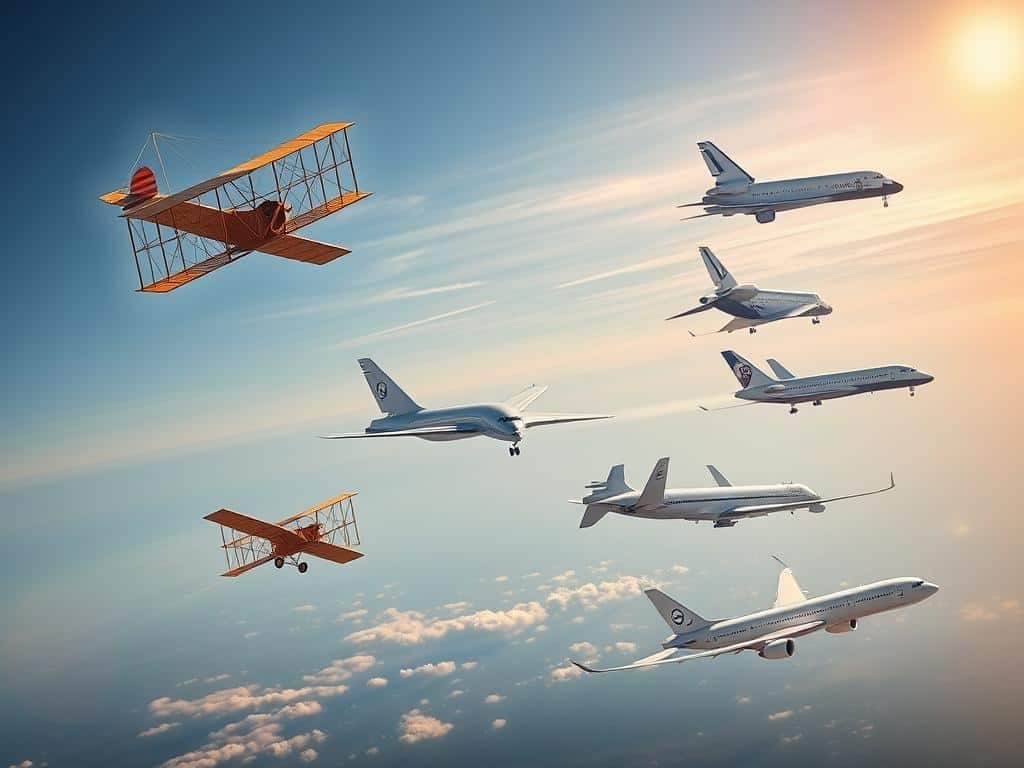
As a child, I would look up at the sky, amazed by airplanes cutting through the clouds. They sparked a lifelong love for aviation history. I think about the key events that made me love flying—the moments that changed travel and our world.
Each milestone shows a big step forward, thanks to human dreams, new ideas, and sometimes, hard lessons. Flying today seems easy, but it took amazing breakthroughs and learning from mistakes to get here. By knowing these five moments, we see the bravery of those who first flew.
Key Takeaways
- The evolution of flight is marked by several significant milestones that transformed aviation history.
- Human ambition has been a driving force behind the continuous improvement in air travel safety and efficiency.
- Understanding the key events in aviation history helps us value today’s advancements.
- Safety steps taken after accidents have been key to keeping flying safe for everyone.
- Every major aviation milestone teaches us lessons that shape our flying today.
The Wright Brothers and the Birth of Aviation History
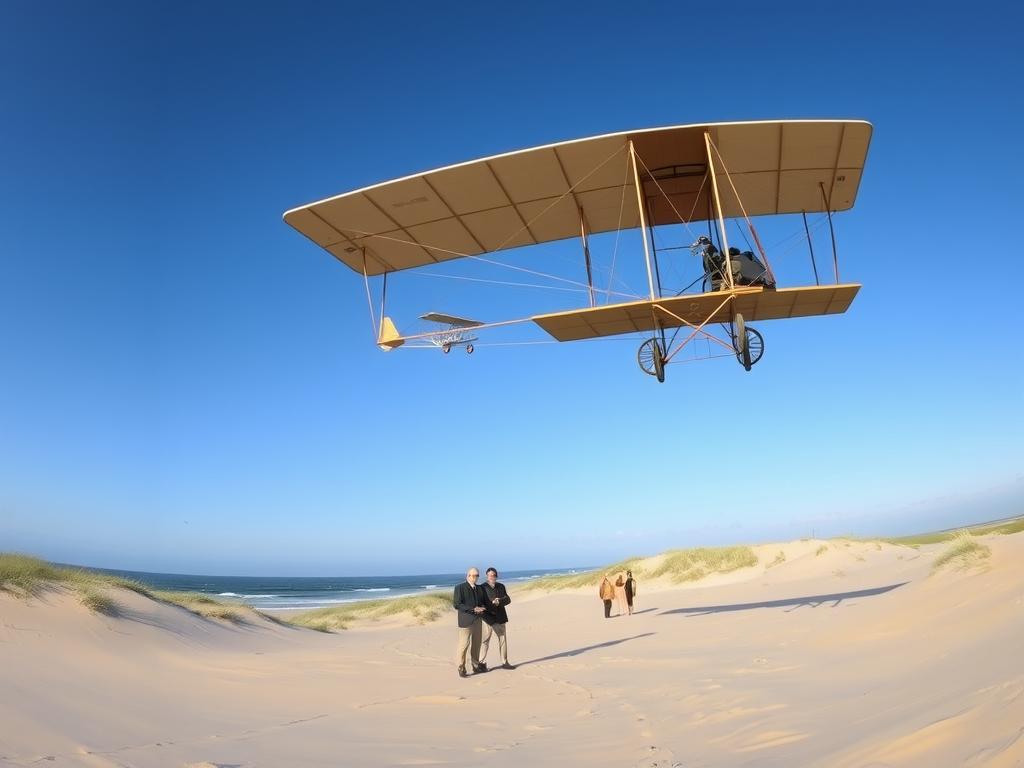
The Wright Brothers, Orville and Wilbur, changed air travel forever. They worked hard to make the first powered flight possible. In December 1903, they made history at Kitty Hawk, North Carolina, with the Wright Flyer.
This moment marked the start of modern aviation. It opened the door to new possibilities in flight.
The First Powered Flight
On December 17, 1903, the Wright Brothers made four flights. The longest was 852 feet in 59 seconds. This was the first time anyone had flown with power.
The longest flight lasted just 12 seconds. But it sparked a wave of interest in flying machines.
Impact on Flight Evolution
The Wright Brothers did more than just fly. They improved aircraft design and control. Their work helped others in the field.
They showed the world what powered flight could do. Their creativity and passion paved the way for aviation’s future.
Major Milestones in Aviation Safety
Aviation safety has changed a lot over the years. Big incidents like the Tenerife Airport Disaster and 9/11 have changed how we think about safety in the skies. These events made us rethink how to keep flying safe.
Tenerife Airport Disaster
The Tenerife Airport Disaster happened in March 1977. It was a crash between two Boeing 747s on the runway. Sadly, 583 people lost their lives.
This disaster showed how important clear communication is in aviation. It made the industry realize they needed better ways to talk and train pilots. The lessons from this disaster have shaped safety rules that are with us today.
9/11 and Its Aftermath
The 9/11 attacks changed aviation safety forever. On September 11, 2001, terrorists attacked U.S. airports. This led to new security steps at all U.S. airports.
New screening methods, the TSA, and stricter ID checks changed flying for everyone. These steps were to keep flying safe from future threats. The 9/11 attacks reminded us of the need for constant safety checks and updates in air travel.
Conclusion
The journey of flight started with the Wright Brothers on December 17, 1903. Their first powered flight was a big step forward. It showed how far aviation has come.
From the Wright Brothers to today, aviation has grown a lot. The first practical airplanes came in 1905. This shows how hard work and new ideas have pushed aviation forward.
Safety has always been a big part of aviation. Laws like the Air Commerce Act of 1926 have made flying safer. Tragic events have also taught us to always improve safety.
Looking ahead, aviation is ready for new challenges. Technology and a focus on safety will keep air travel safe and efficient. The history of flight shows us that innovation and hard work will keep aviation moving forward.