Planning my first international trip was both thrilling and scary. As I looked through brochures, I couldn’t wait for the adventure. But, I soon felt overwhelmed by all the preparations needed for a smooth trip.
I had to learn about travel rules and make sure I had all the right documents. It was a lot to handle.
After doing my research, I felt better prepared. I learned about packing and airport procedures. This knowledge helped me feel more confident about my trip.
Now, I’m ready to share important tips for flying internationally. These tips will help you start your journey with ease and excitement.
Key Takeaways
- Book international flights at least 30 to 60 days in advance for the best prices.
- Ensure your passport has enough blank pages and remains valid for at least six months.
- Consider travel rewards credit cards for benefits such as TSA PreCheck credit and baggage delay reimbursements.
- Notify your credit card issuer about foreign travel to avoid issues with your account.
- Arrive at the airport at least three hours before your international flight for a smoother check-in process.
- Research customs regulations for food imports to avoid issues upon arrival.
- Use packing cubes to save time and keep your luggage organized.
Understanding International Travel Regulations
Knowing the rules for international travel is key for a smooth trip. It’s important to know the difference between domestic and international flights. Domestic flights stay within the U.S., while international flights have their own rules.
I need to make sure my passport is good for at least six months after I return. Some places might also need blank pages in my passport for stamps and visas.
Difference Between Domestic and International Flights
Booking flights means knowing the rules for international flights are different. Customs checks happen at both the start and end of international trips. This isn’t true for domestic flights.
Every country has its own rules for what you can bring in or out. Knowing these rules helps avoid delays or problems on your trip.
Customs and Documentation Requirements
Before I go, I check the customs and document needs of my destination. This includes looking into visa rules. Some countries let you in without a visa, while others need one.
I get this info from the embassy of my destination. I also need proof of onward travel and any vaccination records. Not having these could cause big problems on my trip.
International Flight Tips for a Smooth Journey
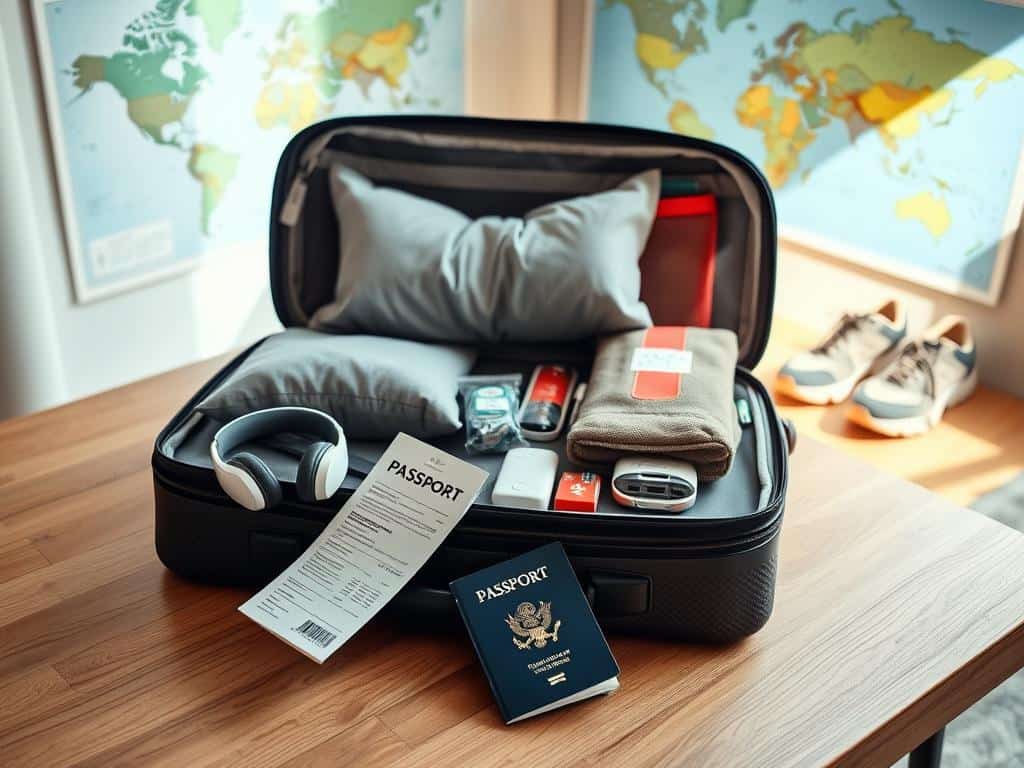
When packing for long international flights, it’s important to think carefully about what to bring. I start with the packing essentials to make sure my luggage fits the airline’s rules and avoid extra fees. I choose lightweight and versatile clothes that can be mixed and matched for different situations without taking up too much space.
In my carry-on, I pack important travel documents, any needed medications, a spare set of clothes, and entertainment like books or shows. This helps keep me entertained and comfortable during the flight.
To prepare for long flights, there are a few extra steps to take. To fight jet lag, I adjust my sleep schedule a few days before flying to match the destination’s time zone. Drinking water is key to staying hydrated, which is often a problem on long flights. Doing some light stretching and moving around during the flight also helps reduce discomfort and makes the trip better.
Arriving at the Airport: What to Expect
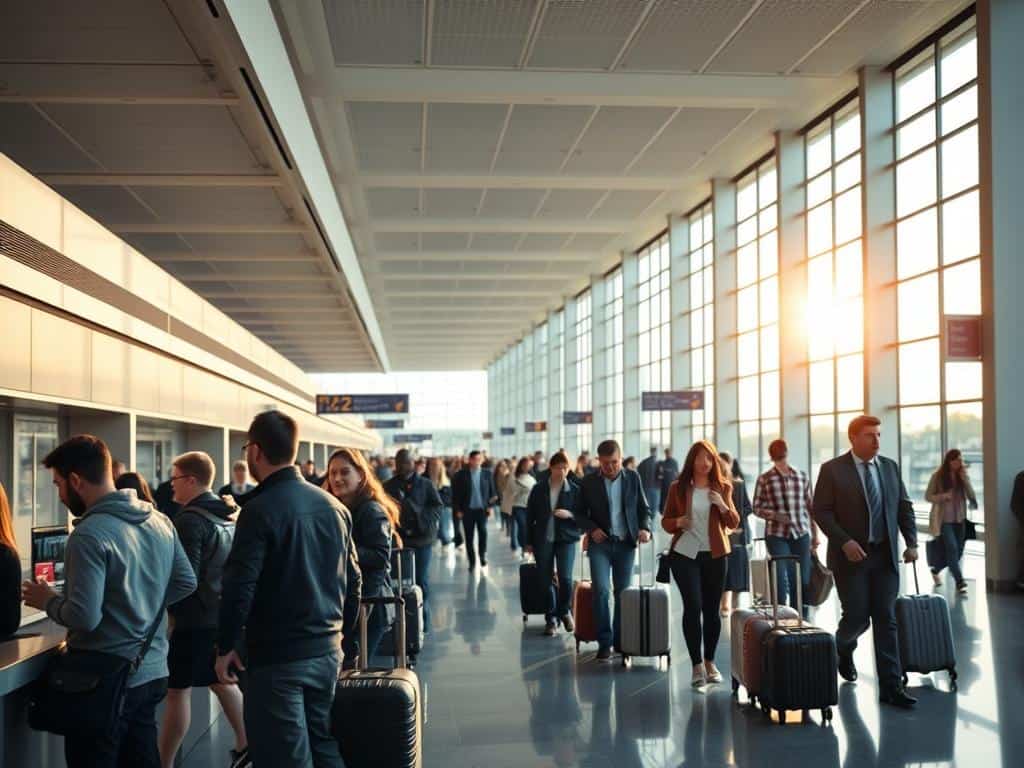
Getting ready for the airport makes flying better. Arriving three hours before your flight starts is key. It gives you time to check in, go through security, and find your gate.
Busy times can make things slower. So, getting there early is very important.
Recommended Arrival Time for International Flights
International flights start boarding 40 to 60 minutes before they leave. Knowing this helps plan when to arrive. Arriving three hours early lets you handle any surprises or extra checks.
Every airport is different. Arriving early helps you get used to it and avoid stress.
Navigating Airport Layovers
For layovers, plan for at least two hours between flights. This is for security and customs, which can be different in each airport. Having two hours means you’re ready for any delays.
Conclusion
International travel might seem tough, but it’s doable with the right steps. Knowing the rules, from customs to packing, is key. These tips help me get ready for a smooth trip.
Using smart strategies, like picking the best seats and packing snacks, makes travel better. It turns stress into fun. Being ready and informed helps me enjoy my flight more.
With good planning, my trips become easy and fun. I focus on enjoying my adventures, not worries. Being prepared means I can handle anything that comes up.