As I sit in an airplane, the hum of the engines fills the air. It brings a mix of excitement and fear. Millions of us fly, trusting our lives to planes in the sky.
The chance of dying in a plane crash is *1 in over 200,000*. Yet, the fear of flying is real, after recent crashes. Knowing the secrets of safe seats can help us feel better.
About *90%* of plane crashes are survivable. This means choosing the right seat can make flying safer. Let’s explore how to pick the safest seat for our next flight.
Key Takeaways
- The odds of dying in a plane crash are remarkably low compared to other everyday risks.
- Choosing the right seat can impact passenger survival rates during an emergency.
- Most aircraft accidents are survivable, with a significant percentage of passengers emerging intact.
- Understanding air travel safety statistics empowers travelers to make informed seat selections.
- Even in the safest flying conditions, it is important to know about seating options and emergency procedures.
Understanding Air Travel Safety Statistics
Exploring air travel safety, I find the stats reassuring. The safety record of flying is impressive. The chances of dying in a plane crash are very low.
Studies show a steady drop in risk. For example, the National Safety Council says these odds are “too small to calculate.” A MIT study found that flying has gotten much safer. The risk of dying in a plane crash has dropped from 1 in 350,000 to 1 in 13.7 million.
The Safety Record of Air Travel
A report by the National Transportation Safety Board is eye-opening. It shows that 95.7% of people survived plane crashes between 1983 and 2000. The European Transport Safety Council also found that 90% of passengers survived accidents worldwide.
While emergencies happen on 1 in 609 flights, quick actions can save lives. Doctors on planes often help, which boosts survival rates. These numbers paint a clear picture of how safe flying is.
Analyzing the Fatality Rates in Different Sections of the Plane
Looking at crash data, we see that rear seats are safer. They have a 32% fatality rate, compared to 39% for middle seats and 38% for front seats. Middle seats in the back are the safest, with only a 28% fatality rate.
Plane Seat Secrets: Where to Sit for Safety
Knowing the safest seats on a plane can make your trip better. Studies show that where you sit matters a lot in emergencies. Picking the right spot and knowing what to do in an emergency can save your life.
Choosing the Right Section of the Plane
Experts say sit towards the back for safety. This area is safer because fewer people die there. A report from the FAA shows that the back third is safest, with a fatality rate of 32%.
The middle seat in the back is the safest, with a rate of 28%. This shows that choosing your seat wisely can help keep you safe.
Ideal Seats in Case of Emergency Landing
Being near emergency exits is key in emergencies. Studies show that those near exits have a better chance of survival. It’s smart to pick seats near exits, even if they’re in the middle.
Knowing emergency landing precautions and listening to crew can help. Knowing where exits are and how to get out can save your life in an emergency.
The Impact of Seat Type on Safety and Comfort
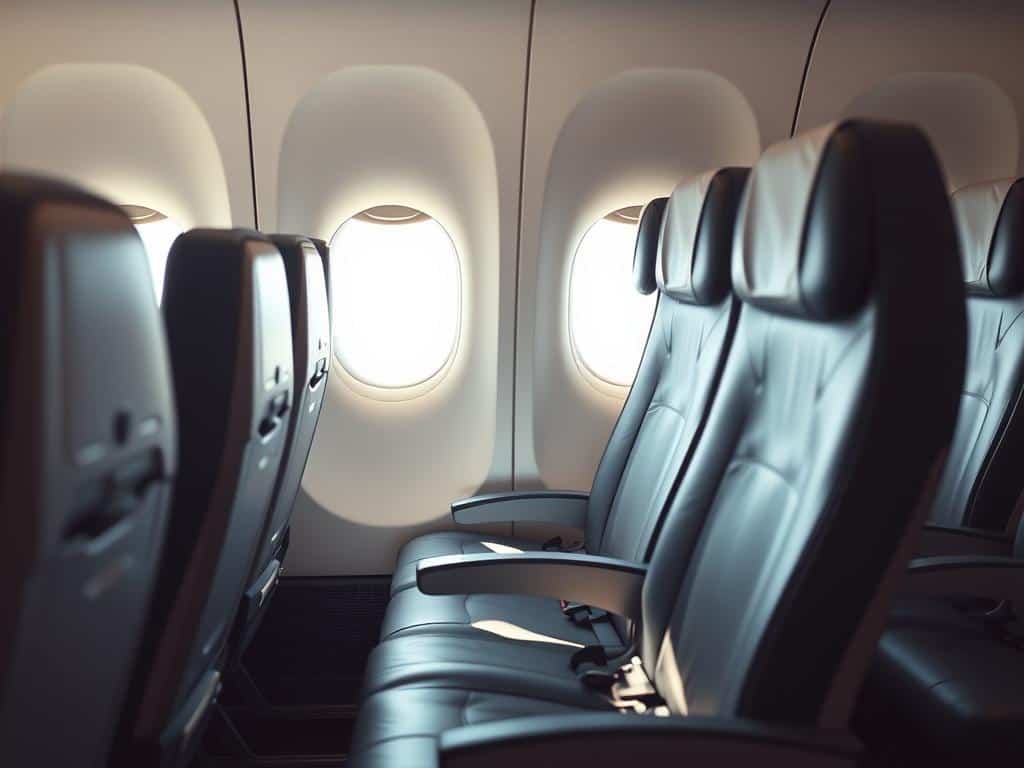
Knowing how seat types affect safety and comfort is key when picking a seat. My own flying experiences show that the seat I choose greatly impacts my flight. Many travelers struggle with choosing between aisle and window seats. Each has its own benefits and drawbacks for both comfort and safety.
Aisle, Window, or Middle Seat: Which is Best?
When comparing seats, the choice between aisle, window, or middle is important. Window seats offer a nice view and feel secure. Aisle seats are closer to restrooms and exits but might be at risk from overhead bin items. Middle seats, often overlooked, could be safer in crashes due to the cushioning from passengers on both sides.
Research suggests that seats in the back of the plane might be safer, with the middle section being the most stable during turbulence.
Emergency Exit Tips
Proximity to emergency exits is a big safety factor. Seats near exits can increase survival chances in emergencies. It’s also wise to know the escape routes and consider the location of fuel storage, usually in the wings.
Studies from past accidents show that certain seat locations can greatly affect survival. This knowledge helps me make better choices when booking flights.
Conclusion
Exploring air travel safety shows that picking your seat wisely matters a lot. Seats in the back of the plane have a 69% chance of survival in an accident. Seats over the wings have a 56% chance. This highlights the need to think about safety when booking your seat.
Travel safety tips point out that the back of the plane is safer. Yet, being close to emergency exits is also key. Seats near exits can boost survival chances in emergencies. Aisle seats in the second exit row offer more legroom, making them a good choice.
Premium economy seats add comfort and are often available until boarding. This is something to think about for a better flight experience.
Knowing about air travel safety can make flying less stressful. By staying alert and following crew instructions, we help make flying safer. Even with more safe flights, understanding your seat’s safety can make you feel more secure in the air.