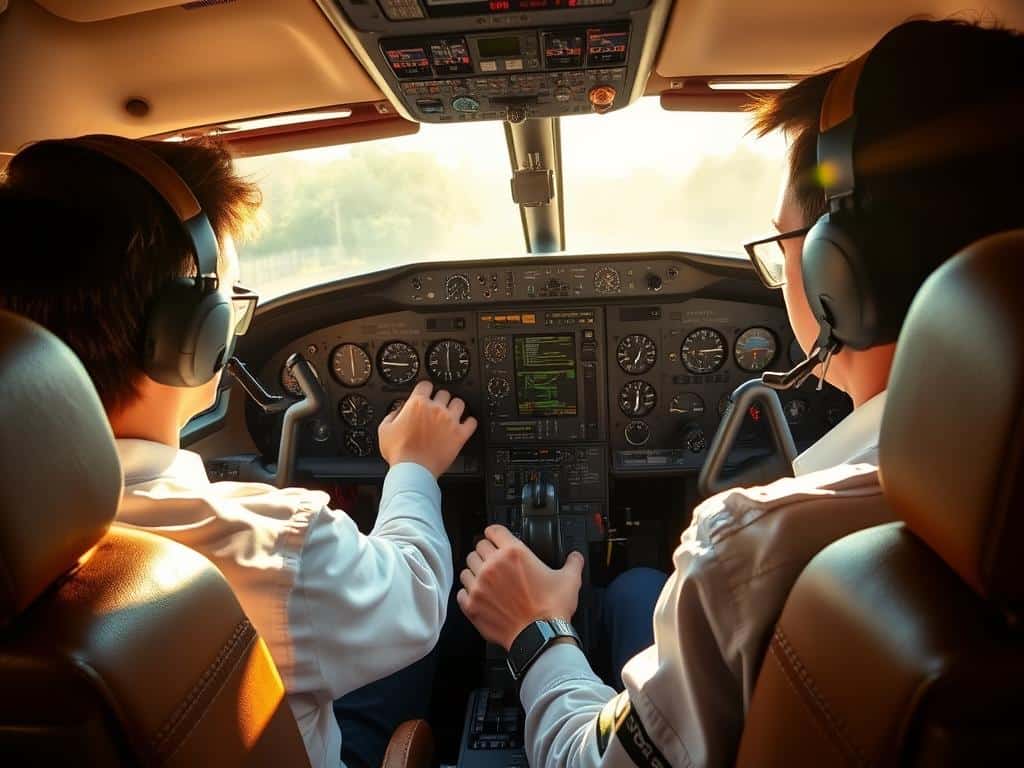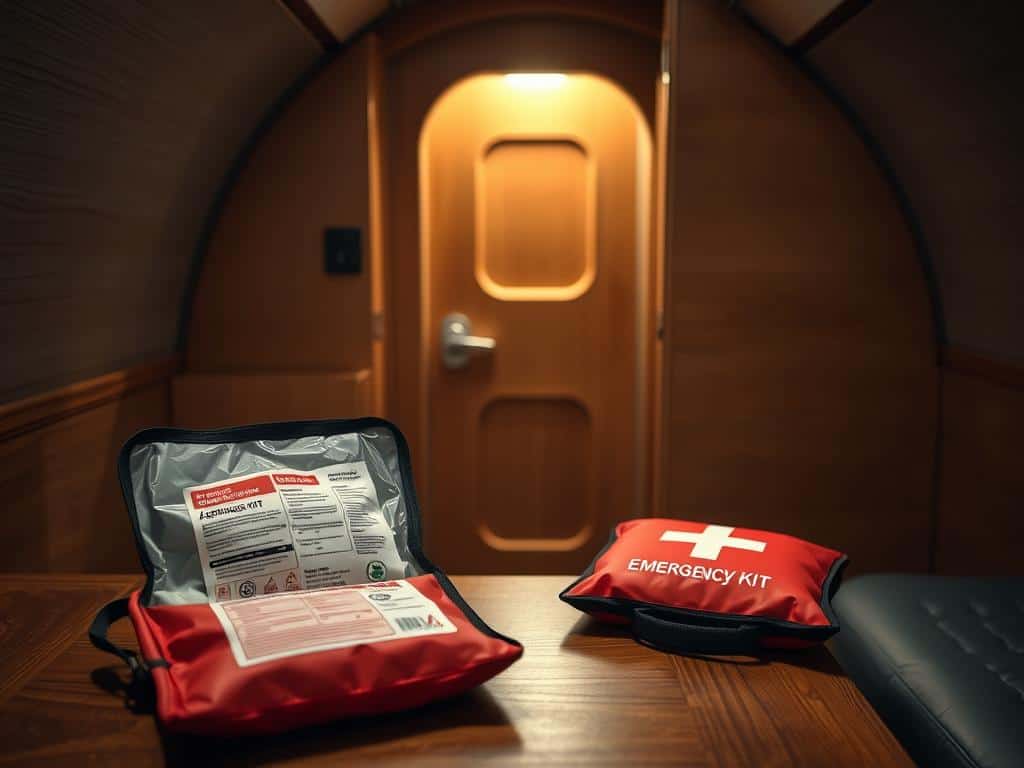
As I settle into my seat on another flight, I often think about the aircraft design. My father, a devoted pilot, always worried about flying without a door next to him. He saw it as a safety issue and a comfort factor.
Looking back at incidents like Alaska Airlines Flight 1282, we see how important doors are. A door failure led to rapid depressurization. This shows how critical these doors are for our safety. Every detail in aviation is designed to keep us safe, even in emergencies.
Let’s explore why small airplane doors are so important. They are not just about looks; they are key to our safety in the air.
Key Takeaways
- Small airplane doors play a vital role in cabin safety and pressure management.
- Emergency exits are designed to facilitate quick evacuation in critical situations.
- The structural integrity of doors is essential for maintaining cabin pressure during flight.
- Design advancements, including plug doors, enhance safety against possible hazards.
- Understanding the mechanics of aircraft doors helps us appreciate the safety measures in aviation.
The Significance of Small Airplane Doors
Small airplane doors are key to cabin safety. They make boarding easy and keep the aircraft strong during flight. Knowing their role helps us see how they affect pressure and aircraft design.
Understanding Cabin Safety
Cabin safety is very important in flying. Small doors play a big part in this. They keep the cabin pressure higher than outside, so doors stay shut.
Modern planes have special doors that seal well. This keeps air leaks out and passengers safe. It shows how careful engineers are about safety.
How Door Size Relates to Pressure Differential
The size of airplane doors matters a lot. Big doors can be risky if not made right. They might weaken the plane’s structure.
Special doors, called plug doors, are designed to handle pressure well. They seal tight and can’t open in flight. This keeps passengers safe. Door size is very important in plane design, showing the complex work of aviation engineers.
Emergency Exits: Design and Function
Knowing how emergency exits work is key to keeping everyone safe in planes. These exits are vital for getting people out fast in emergencies. They help protect both passengers and crew. The use of plug doors is a big step forward, making exits safer and meeting strict safety rules.
What Are Plug Doors and Their Advantages?
Plug doors are made to stay shut tight against cabin pressure. This design keeps them closed during flights, keeping the cabin strong. When it’s time to leave, these doors open quickly, helping everyone get out fast.
Using plug doors makes evacuating planes safer and more efficient. This is important because planes must empty in 90 seconds or less, as rules demand.
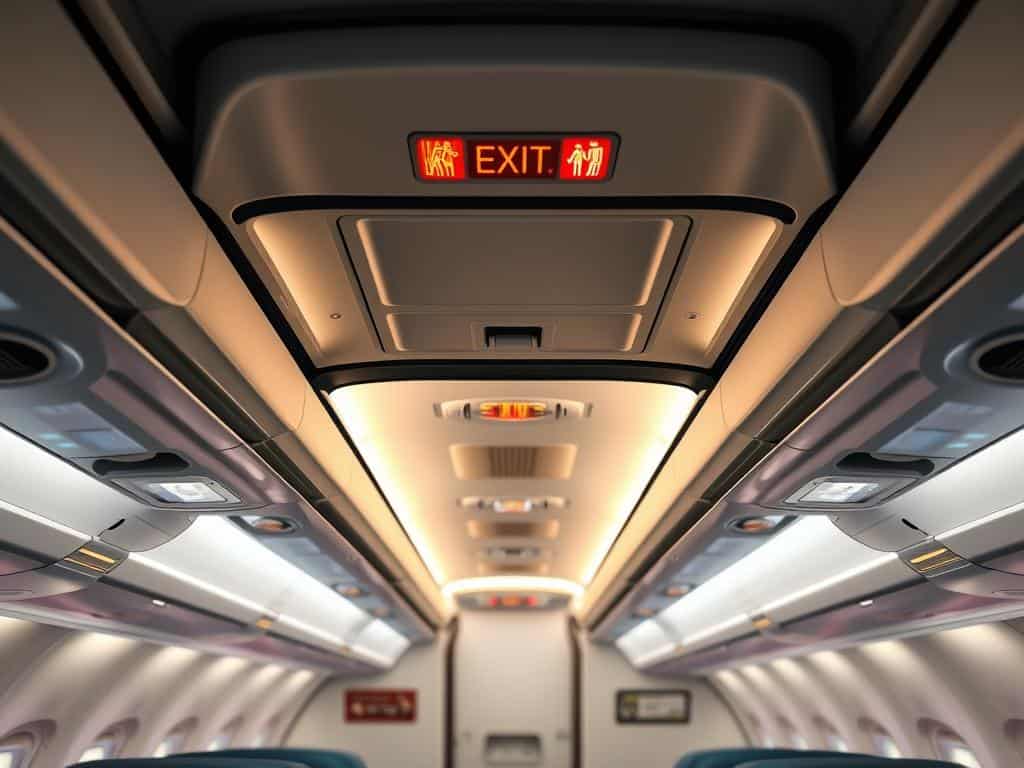
Regulations for Emergency Exits in Aircraft
Rules for emergency exits in planes are very strict. Each plane must have enough exits for its passengers. Following these rules is essential to reduce risks in emergencies.
Exits must be checked and kept in good shape regularly. This ensures they work when needed most. Keeping up with these rules is critical for airlines to stay safe.
Conclusion
Plane doors are key to keeping passengers safe while flying. They face huge pressure changes, yet they are built with safety in mind. Emergency exits are a big part of this, making sure people can get out quickly if needed.
Looking into how planes are designed, we see the need for regular checks. This includes understanding special doors like plug doors. It shows how important these systems are for getting out fast and safely.
Learning about airplane doors helps us see how much goes into keeping us safe. It makes us appreciate the work that goes into making travel safe for everyone. This knowledge is important for understanding the effort put into aviation design.