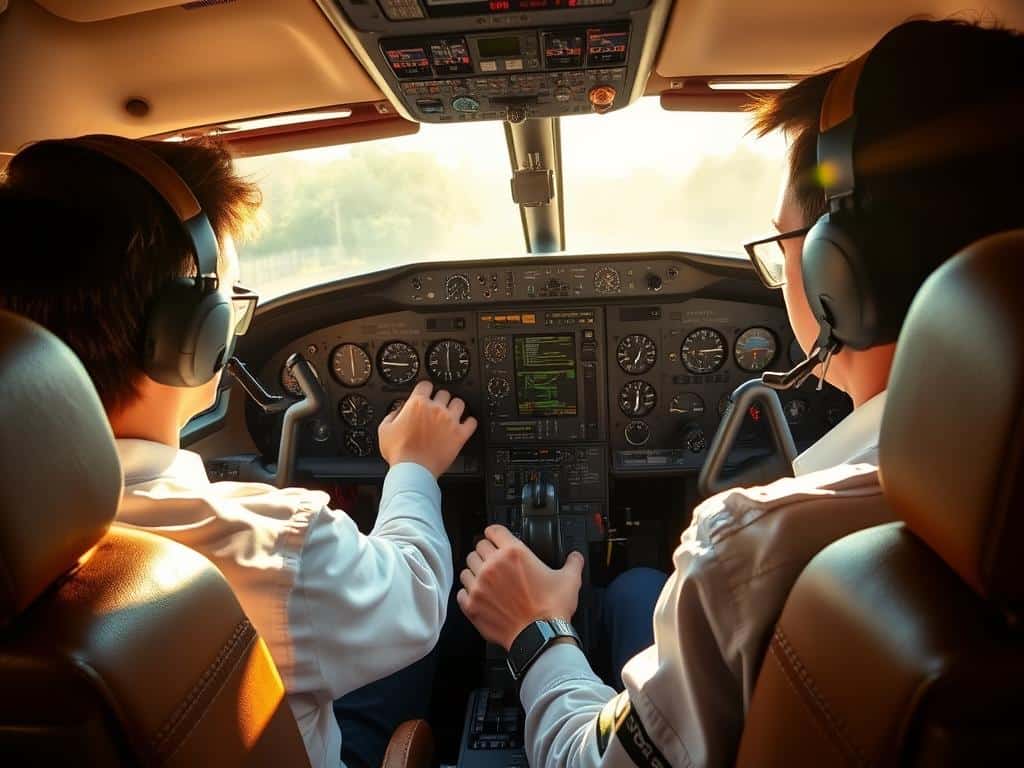
As I settle into my seat on yet another flight, I’m often drawn into the delicate dance unfolding in the cockpit just beyond the closed door. It’s a space where trust and collaboration intermingle. Co-pilots, or first officers, play a vital role in this dance of flight safety and cockpit functions.
Knowing that there’s a skilled co-pilot beside the captain eases my mind, even when turbulence shakes our journey. Each person in the cockpit, regardless of title, is devoted to one ultimate goal: ensuring our flight safely gathers altitude and lands gracefully. Their unseen efforts are essential, sharing the weight of various responsibilities, from operational duties to vital communication.
Understanding what these co-pilot roles entail not only enlightens me about my own safety during flights. It also highlights the rigorous training and dedication they embody.
Key Takeaways
- The minimum crew requirement for turbo-propeller aircraft in the EU is two pilots.
- Co-pilots play a vital role in maintaining flight safety responsibilities alongside the captain.
- Training for co-pilots includes logging time as pilot in command under supervision while pursuing an airline transport pilot license.
- Responsibilities and decision-making are often shared equally between first officers and captains.
- Some pilots may choose to remain as first officers for seniority benefits.
- The transition from first officer to captain is determined by seniority within the airline.
Understanding the Role of a Co-Pilot
The role of a co-pilot is both critical and complex. They play a key part in ensuring flights are safe. Their duties go beyond just helping the pilot, covering important tasks that impact the flight.
Key Responsibilities in the Cockpit
Co-pilots handle important cockpit roles. They do pre-flight checks to make sure everything is ready. They watch important instruments during the flight and manage navigation systems.
They also talk to air traffic control, following safety rules. This work helps make flights safe and efficient.
Supporting the Pilot’s Operations
Co-pilot support is key to better pilot operations. They keep an eye on the flight’s progress, helping out and making suggestions. Collaboration in aviation is vital, making flights smoother and safer.
Importance of Communication and Coordination
Good communication and coordination are key for a successful flight. Keeping everyone updated on the flight’s status is important. This helps solve any problems that might come up.
Using crew resource management (CRM) helps in making decisions together. This strengthens aviation teamwork in tough situations. Both the pilot and co-pilot play a big role in making the flight safe and successful.
Pilot vs. Co-Pilot: Differences and Similarities
The aviation world needs a deep understanding of pilots and co-pilots’ roles. Both are key to safe flying and go through a lot of training. Knowing their roles helps in teamwork and making quick decisions in the air.
Training and Certification Requirements
Pilots and co-pilots need to meet strict training standards. Pilots get an Airline Transport Pilot (ATP) license after lots of flying and classes. Co-pilots start with a Commercial Pilot License (CPL) and move to ATP after more flying.
Both go through training that includes emergency simulations. This prepares them for real challenges in the cockpit.
Flight Responsibilities and Decision-Making
Knowing who does what in the cockpit is key. The pilot makes big decisions like where to fly and how high. The co-pilot helps by getting the information needed for these decisions.
In emergencies, co-pilots can take over. This teamwork makes flying safer and more efficient.
Teamwork in the Cockpit
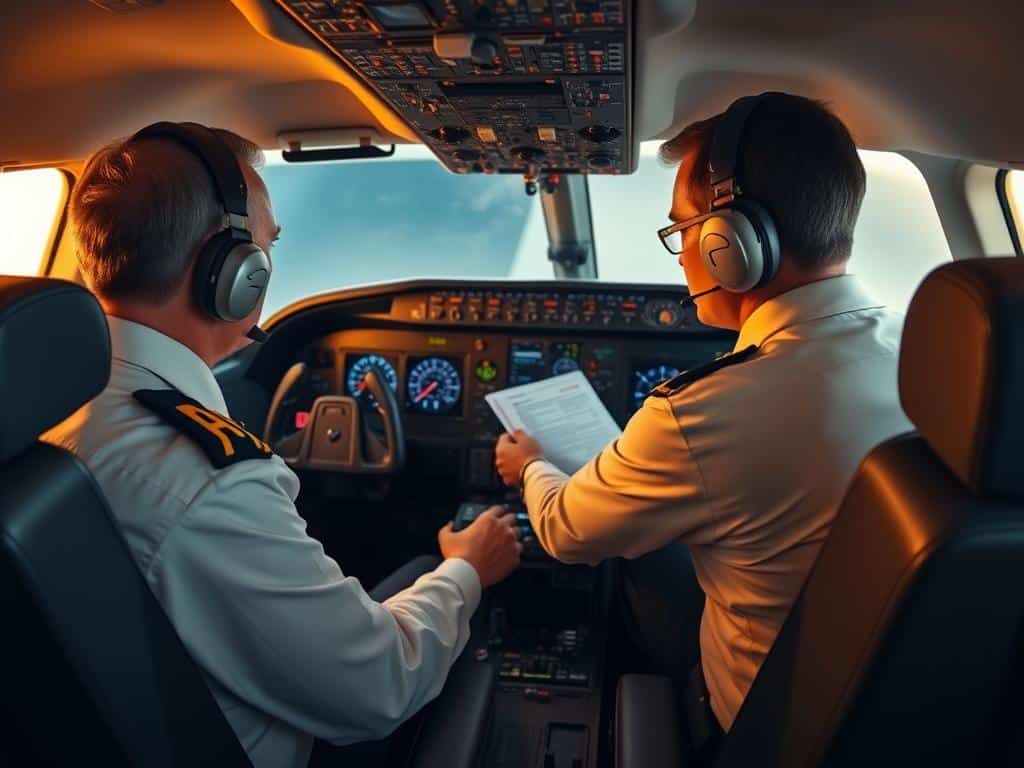
Good teamwork in the cockpit is vital. Trust and teamwork between pilots and co-pilots are essential. They use each other’s strengths to handle tasks and share the mental load.
They follow rules closely, like during take-offs and landings. This teamwork ensures safety and quick action in unexpected situations.
Conclusion
The co-pilot role is key in aviation. They do important tasks that make flying safer and more efficient. Their work on communication and teamwork is vital for safety.
Co-pilots and pilots work together well. They respect each other and share the responsibility of flying. Before takeoff, they use special phrases to show who is in charge.
Learning about co-pilots helps us understand flying better. They go through tough training to be ready for anything. Their teamwork makes flying safe and builds trust with passengers and the industry.