Every time I look up, I see cargo planes flying high. These giants carry unseen stories around the world. They bring hope, commerce, and essential goods to every corner.
I remember waiting for a package, not knowing its long journey. Each flight is a complex dance of logistics and timing. It’s vital for a world that needs speed and efficiency.
Cargo planes are more than just planes. They are lifelines for industries, families, and economies. With e-commerce growing, these planes are key. They carry everything from fresh produce to life-saving medical supplies.
Exploring cargo aviation opens our eyes to a vast network. It shows how these planes connect our lives. Let’s uncover the importance of air freight and how these planes help us.
Key Takeaways
- Cargo planes are specialized aircraft for transporting goods, playing a vital role in global logistics.
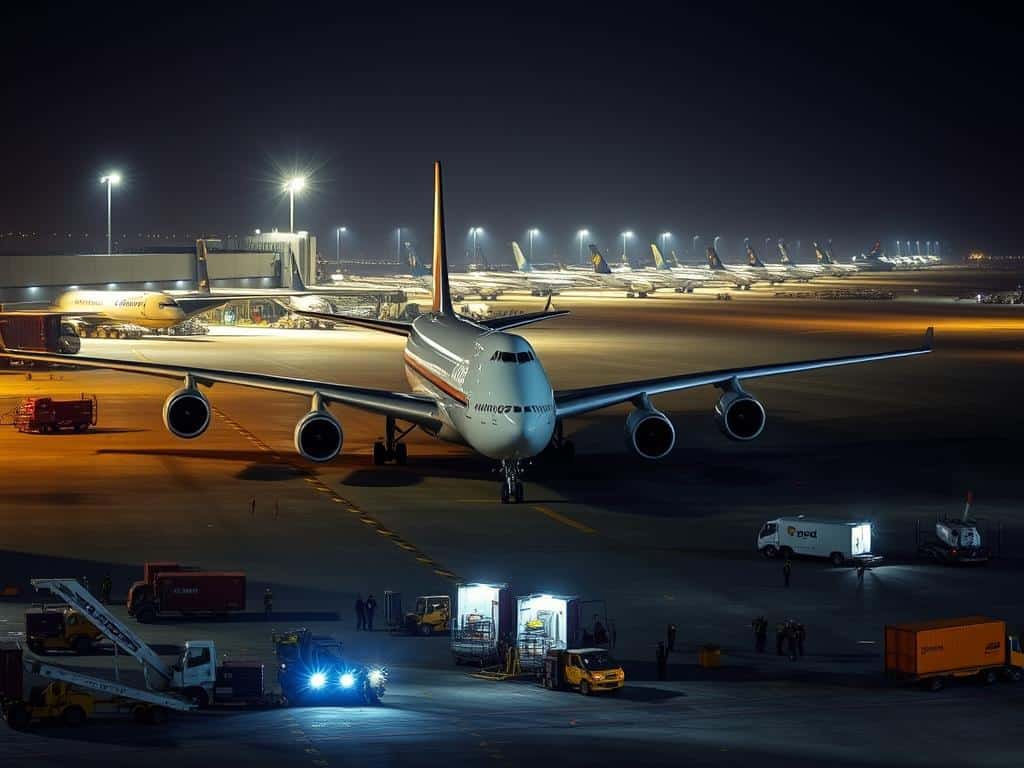
- The Boeing 747 cargo is iconic for its large capacity, capable of carrying the equivalent of five semi-trucks.
- Dedicated cargo aircraft provide significant cost savings and operational efficiencies compared to standard airline cargo holds.
- Air freight accounts for approximately 35% of world trade by value, underlining its importance in the economy.
- Fast delivery services and rising global trade have driven the growth of the air cargo market.
- Industries such as agriculture and pharmaceuticals heavily rely on air cargo for timely transport of essential goods.
The Evolution of Cargo Planes
The history of cargo aviation is a story of innovation and change. It shows how cargo planes have evolved to meet the needs of air transport. This evolution is key to understanding how today’s designs help with logistics.
A Brief History of Cargo Aviation
The first “cargo only” flight happened on November 7, 1910. It carried 10 bolts of silk 65 miles in 57 minutes. Regular airmail service started in 1918, laying the groundwork for air freight.
In the 1920s, air shipping became more common. It focused on important items like fashion, parts, and medicines. After World War II, bigger planes and airlines like FedEx and UPS changed air freight. Today, air cargo moves $6 trillion worth of goods, making up 35% of global trade.
Key Innovations in Cargo Aircraft Design
Important innovations have made cargo planes more efficient and capable. Changes like wider bodies, strong tails, and landing gear help them work in different places. The Boeing 747 freighter design was a big step, allowing for full pallets in the cargo hold.
Features like an opening nose for big cargo items set new standards. The Antonov An-124 Ruslan shows more innovation with cargo loading from both ends. As cargo planes keep evolving, they meet new needs like global e-commerce.
Cargo Planes Operations and Features
Cargo planes have complex systems for efficient operation. They use special technologies to load and unload cargo. Each plane is built to handle different types of goods, helping logistics companies meet various needs.
Loading and Unloading Cargo
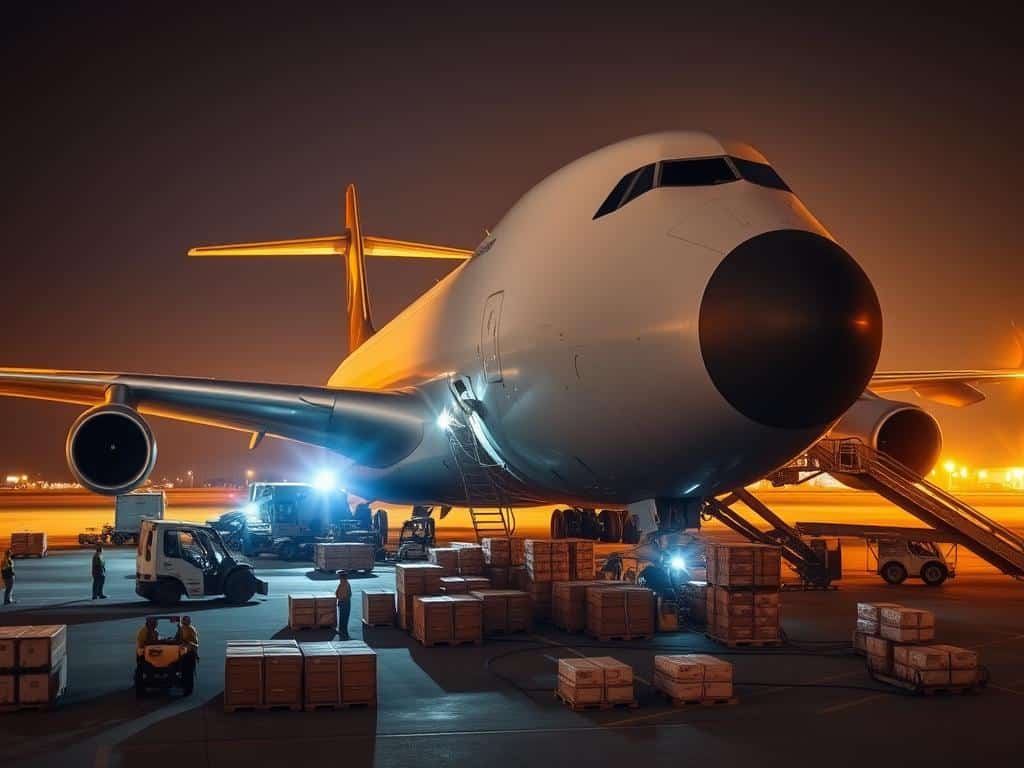
Efficient loading and unloading are key for cargo planes. Modern tech makes these processes faster. The Boeing 747-400 ERF can carry 112 tons, making it great for many types of cargo.
It has special hatches for safe cargo handling. This makes loading easier and safer.
The Role of Electric Rollers and Airstables
Electric rollers help move pallets into cargo holds. They’re useful when forklifts can’t fit. Airstables are for live animals, ensuring safe transport.
These systems make loading and unloading smoother. They work together to improve cargo handling.
Types of Cargo Planes and Their Capacities
There are many cargo planes for different needs. Standard body freighters are common for regional transport. Wide-body freighters, like the Boeing 747 Freighter, can carry over 100 tons.
The Antonov An-124 can carry 150 metric tons. It’s perfect for very large or heavy items. These planes help logistics companies meet various shipping needs, improving efficiency.
The Importance of Cargo Planes in Global Logistics
Cargo planes are key in global logistics, affecting air freight and trade. The logistics market hit $5.4 trillion in 2023. This shows how vital air freight is today.
Fast delivery is what consumers want. Cargo planes make sure goods get to people quickly. This is key for today’s supply chains.
Impact on Air Freight and Global Trade
Air cargo is about 35% of world trade by value. It helps global commerce grow. Companies like Amazon use air freight to meet online shopping needs.
This shows how important logistics efficiency is. Cargo planes can move urgent and valuable goods fast. They have advanced to meet market needs well.
Job Creation and Economic Significance
The cargo aviation sector is vital for jobs and trade. In the U.S., over 250,000 jobs come from this field. It shows the economic value of cargo planes.
Jobs aren’t just in airlines. Ground handling and logistics also benefit. This creates a strong economy, helping businesses adapt to market changes.
As air freight demand grows, so will cargo aircraft. The fleet could increase by 30% by 2035. This means more jobs and economic benefits for years.
Conclusion
Cargo planes are key to modern logistics and global trade. They have big doors for easy loading and strong floors for many types of goods. This shows how they work well in our connected world.
The pandemic made airlines change passenger planes into cargo ones. This shows how the industry can adapt to new needs.
The future of cargo planes looks bright, with a focus on being green. Using Sustainable Aviation Fuel (SAF) will cut down on carbon emissions. The air freight market is expected to grow a lot, making cargo planes even more important for trade.
Learning about cargo planes helps us understand logistics and international trade. As we move forward, cargo planes will play a bigger role in global commerce and health. They help deliver vaccines that save millions of lives every year.