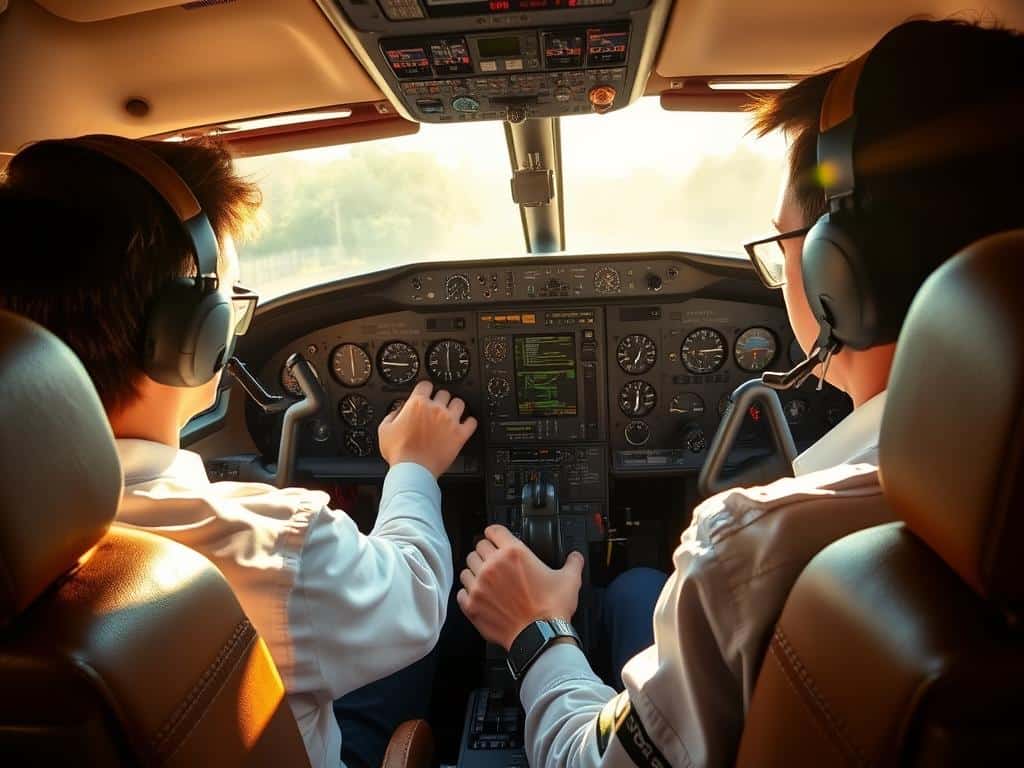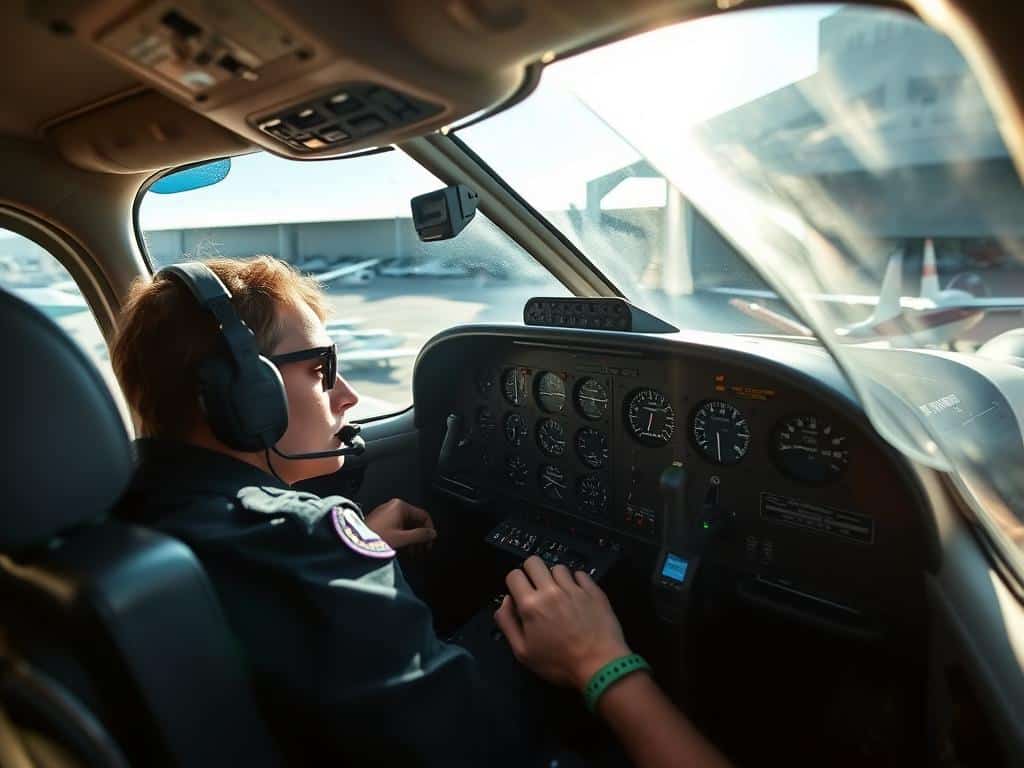
Standing on the tarmac, I felt excitement and a bit of fear. The dream of flying had started a fire in me. But, I didn’t know the hard work and sacrifices that awaited me.
Becoming a pilot is more than just flying. It’s a tough journey with many challenges. From the cost to the emotional ups and downs, it’s a big commitment. It takes a lot of strength and willpower.
The path to becoming a pilot is full of obstacles. Getting a private pilot’s license needs 40 to 60 hours of flying. And, the cost for advanced licenses can be very high.
My journey showed me that every step requires hard work and emotional strength. It’s not just a job—it’s a sign of your endurance and love for flying.
Key Takeaways
- The journey to becoming a pilot requires significant time commitment and dedication.
- Training costs can range from several thousand to tens of thousands of dollars.
- A minimum of 250 flight hours is required for obtaining a commercial pilot’s license.
- Emotional and physical demands are a vital part of the pilot training process.
- Understanding the reality of pilot training can help set realistic expectations for aspiring pilots.
- Accelerated training programs may expedite the learning process for those willing to commit fully.
The Challenges of Becoming a Pilot
Starting your journey to become a pilot is tough. It tests your dedication and strength. You’ll face many challenges, from financial to emotional, while training.
Understanding the Time Commitment
Getting a pilot’s license takes a lot of time. For a private license, you need 40 to 60 flight hours. Commercial pilots need at least 250 hours.
This journey can last years. It depends on how fast you learn and the training you choose.
The Financial Investment Required
Money is a big issue for pilots in training. Costs can be high, from $100,000 to $150,000. Many students use loans or scholarships to help pay.
There are also costs for school, exams, and living expenses. These add up and can be hard to manage.
Emotional and Physical Demands
Being a pilot is more than just flying. It’s a tough emotional and physical challenge. You must pass tough exams that test your skills and knowledge.
Staying focused and managing stress are key. Pilots face high-pressure jobs and irregular schedules. They also risk health problems from the lifestyle.
Pilot Training: What It Entails
Starting a career as a pilot means going through a detailed training process. This includes both flying lessons and learning through ground school. It’s important to know what this training covers if you’re thinking about becoming a pilot.
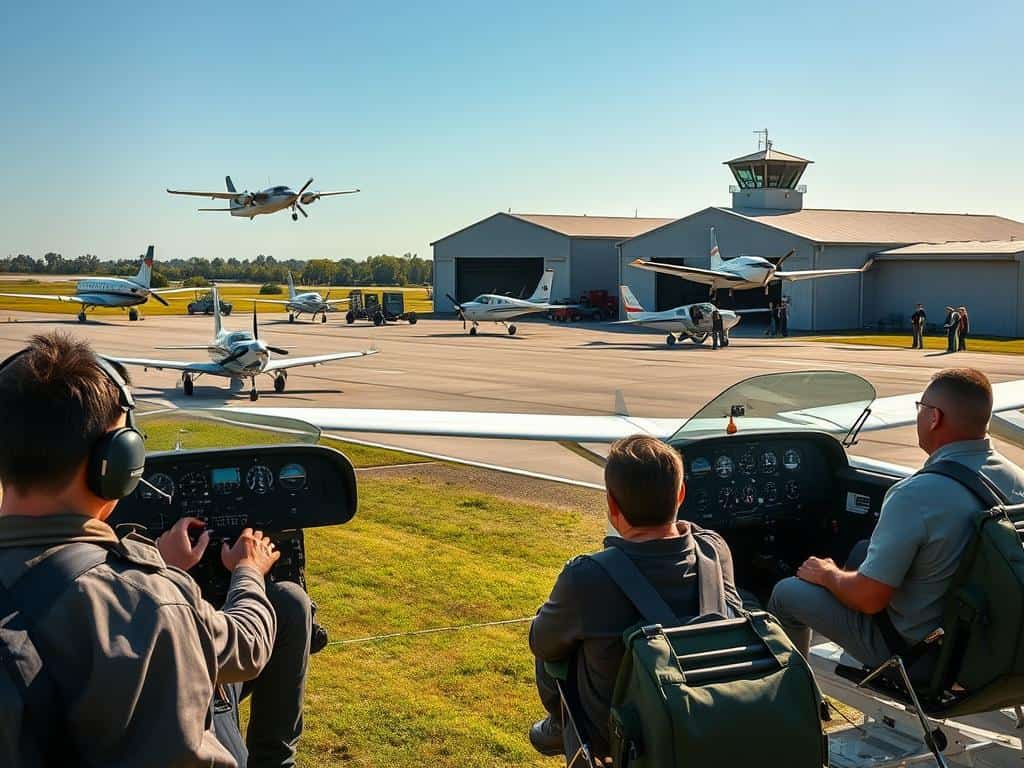
Flight Training Basics
Flight training starts with practical lessons from Certified Flight Instructors. This is the first step towards getting a Private Pilot License (PPL). To get a PPL, you need to log both solo and dual flight hours.
After meeting these hour requirements, you’ll take a practical test. This test shows you’re ready to fly in real situations.
Ground School Requirements
Ground school is key in pilot training. It teaches you the theory you need to know. You’ll learn about aviation rules, navigation, weather, and how aircraft work.
You can take ground school classes in person or online. It depends on what you prefer. Knowing these subjects well is important for passing flight training and getting your pilot license.
Certification and Licensing Process
After finishing flight and ground school, you’ll take exams to get your pilot certification. These exams include written, oral, and practical tests. They’re overseen by FAA-approved examiners.
Getting a PPL is just the beginning. Many pilots then work towards Commercial Pilot Licenses (CPL) and even the Airline Transport Pilot License (ATPL). The ATPL is a big deal for those wanting to fly for airlines.
Lifestyle of a Professional Pilot
The life of a pilot is full of unique benefits and challenges. People thinking about becoming pilots might not know what it’s like. It affects daily life and work commitments in big ways.
Work-Life Balance
Pilots work about 50-75 hours a week, often far from home. This tough schedule can make it hard to keep up with family and friends. They must adapt to changing flight times and deal with jet lag.
Creating routines for rest and managing social life is key. It’s hard but necessary for staying well.
Job Flexibility and Related Challenges
Traveling a lot and having a somewhat flexible schedule are perks. But, there are big challenges too. Pilots face bad weather, mechanical issues, and long periods away from home.
These demands can be tough on personal relationships. Pilots need strong mental toughness and ways to cope with the job’s stress.
Long-Term Career Prospects
The demand for pilots in the U.S. is growing. This means lots of chances for new pilots. Getting a job at a big airline takes years and starting with small planes.
Advancing in your career means getting more certifications. This opens up new areas like cargo or private flying. It ensures you keep growing in this exciting field.
Conclusion
Starting a career in aviation is tough but rewarding. Becoming a pilot takes a lot of time and money. The industry is growing fast, with a 5-6% annual increase. This means there will be more jobs for skilled pilots in the next ten years.
Quality training is key. It’s not just about flying hours. You also need to know math and physics well. Good training and instructors help you learn to fly safely.
Every part of pilot training is important. It helps you do well in real flying situations. If you love flying, the hard work is worth it. You’ll find many career paths in aviation.