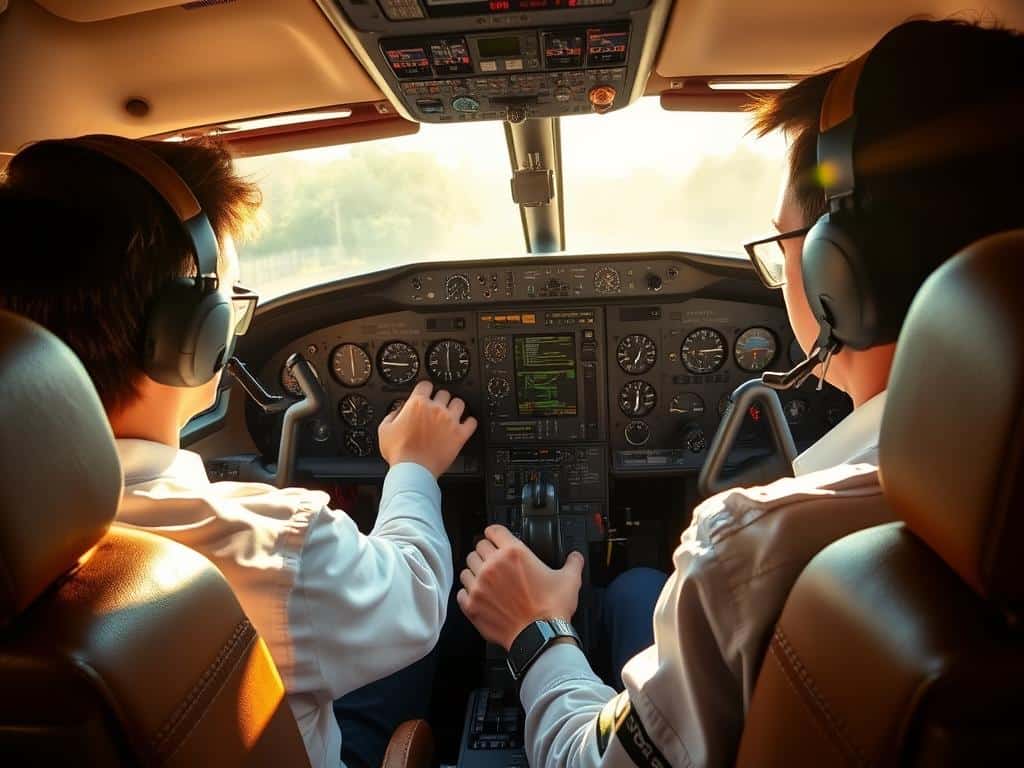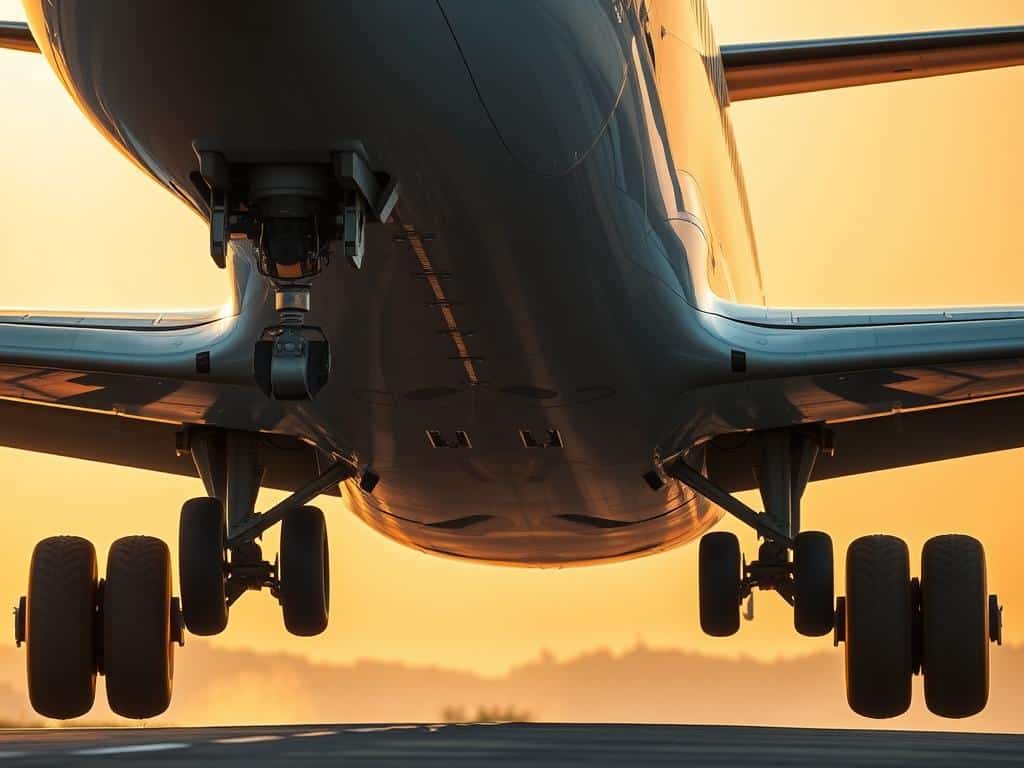
My first solo flight was a mix of excitement and nerves. Landing was the most critical moment. I realized how strong the landing gear was, supporting the plane and all its passengers.
The landing gear is a silent hero, making every landing smooth. It’s surprising that it only weighs 2.5% to 5% of the plane but costs almost 20% of maintenance. This shows how important the landing gear’s strength is for safety and function.
Learning about landing gear construction and materials is fascinating. It’s more than curiosity; it’s about ensuring safety and comfort in the air.
Key Takeaways
- Landing gear is essential in supporting aircraft during landing, takeoff, and ground operations.
- It represents a significant portion of aircraft’s total weight and maintenance costs.
- The design and construction of landing gear play a critical role in aviation safety.
- Exploring the materials and technology behind landing gear reveals much about aircraft performance.
- Understanding landing gear configurations helps decode the intricacies of aircraft engineering.
The Role of Landing Gear in Aviation Safety
Landing gear is key to keeping flights safe and planes working well. It helps planes stay stable and perform well during takeoff, landing, and moving on the ground. Knowing how landing gear is made and designed helps us see its big role in keeping flying safe.
Importance of Landing Gear in Aircraft Functionality
Landing gear is very important for a plane’s function. It has three wheels that form a tripod, making landings more stable. This design helps absorb shock, making landings smoother for everyone on board.
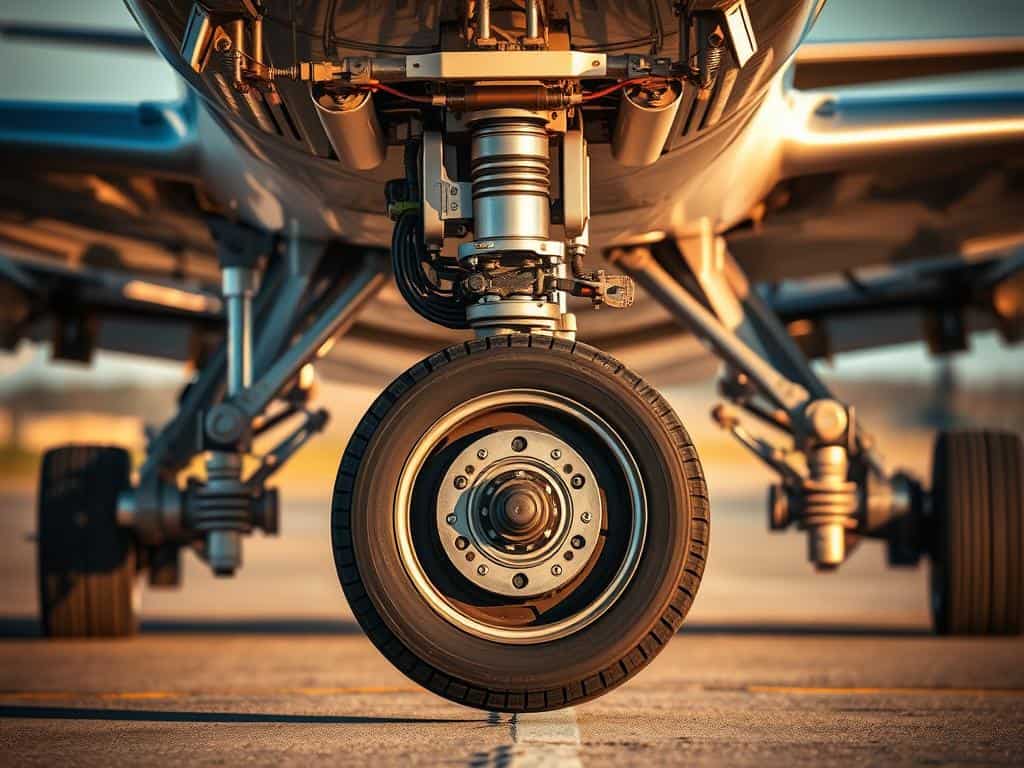
Trailing-link landing gear is special because it absorbs shock well. Its L-shaped arm and oleo strut make landings smoother than other designs.
Landing Gear Construction and Design
Landing gear is built for safety and performance. It’s made with strong steel to hold up the plane’s weight. New designs, like the trailing-link type, are stronger and more flexible, even if they’re heavier.
Fixing landing gear is easier now, thanks to new designs. Replacing shock absorbers can be done without taking apart the whole system. This makes maintenance faster and more efficient.
Materials Used in Landing Gear Manufacturing
The materials used in landing gear are very important. They affect how strong and light the gear is. Companies use lightweight composites and strong alloys to make gear that’s both durable and light.
New ways of making landing gear parts have made production faster. Using advanced materials not only makes gear perform better but also makes flying safer.
Unraveling the Landing Gear Mystery
Landing gear is complex, involving stress tolerance and load-bearing capacity. These are key for handling loads during takeoff and landing. A good landing gear system must handle vertical, horizontal, and side loads well.
Stress Tolerance and Load-Bearing Capacity
High stress tolerance is essential for landing gear. Its load-bearing capacity affects an aircraft’s safety during landing. Engineers design it to handle big impacts and forces, ensuring safety.
Shock Absorbers: Oleo-Pneumatic Systems Explained
Oleo-pneumatic systems are vital in modern landing gear. They use oil and gas to absorb landing energy. This system can absorb up to 90% of the impact, making landing smoother and safer.
Types of Landing Gear Configurations
There are different landing gear setups, like tricycle, tail-dragger, and hybrid. Each has its own benefits and drawbacks. The right setup depends on the aircraft’s design and needs.
Conclusion
Exploring airplane landing gear shows it’s a remarkable piece of engineering. It supports heavy loads and ensures safe landings. Its shock-absorbing ability is key to the aircraft’s safety and performance.
The recent case of Malaysian Airlines Flight MH370 shows how vital landing gear design is. The damaged landing gear door gave clues about the plane’s last moments. This shows how good engineering can help solve mysteries.
Landing gear is more than just parts; it’s the heart of safe flights. Its design, engineering, and durability are critical for safe landings. Understanding these systems helps improve aviation safety and reliability.