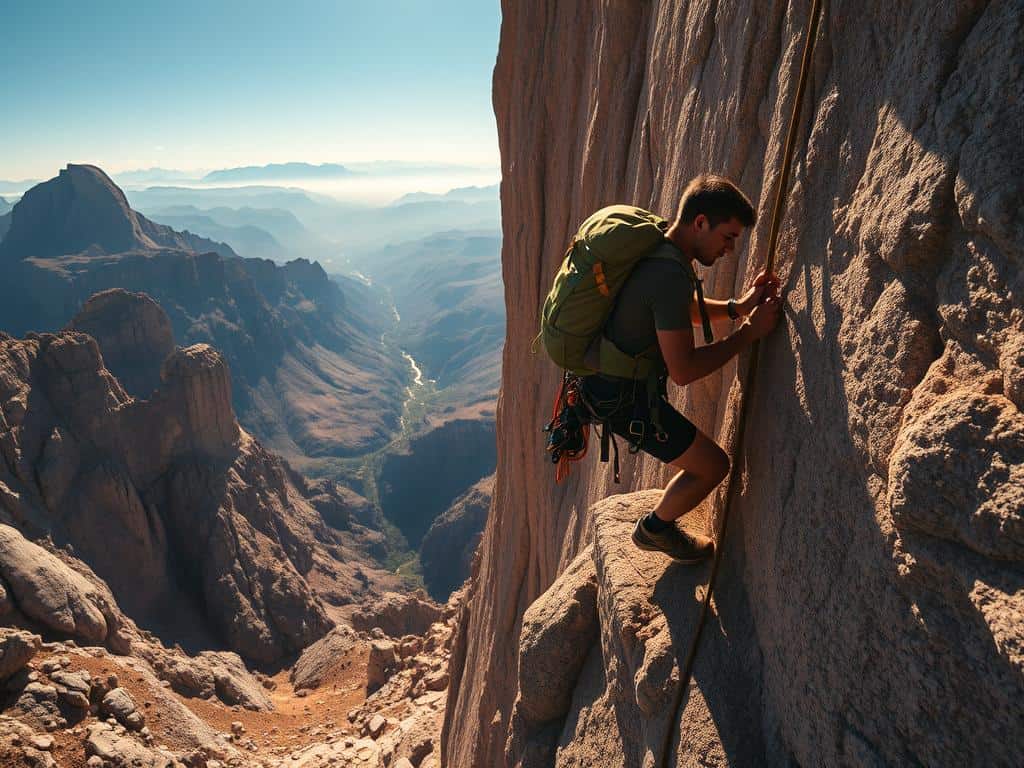
Did you know 90% of adventure photographers prefer landscape orientation? This shows how important perspective is in telling stories through photos. Adventure photography is about capturing the thrill of the moment and the emotions behind it.
When I go on outdoor adventures, taking photos makes me feel closer to nature. To get stunning images, you need to understand light, timing, and action shots. In this article, I’ll share tips that have helped me capture the essence of travel photography.
Key Takeaways
- Adventure photography combines the thrill of outdoor activities with the artistry of photography.
- Understanding lighting conditions is key for capturing vivid images.
- Lightweight and versatile equipment makes it easier to move around in dynamic settings.
- Planning and preparation can greatly improve your photo quality.
- Using the rule of thirds makes your compositions more engaging.
- Capturing candid moments often leads to more vibrant and natural images.
Understanding the Essentials of Adventure Photography
Adventure photography is all about capturing the thrill of outdoor activities. This includes everything from extreme sports to stunning landscapes and cultural moments. It’s about telling a story through each photo, making viewers feel like they’re right there with you.
What is Adventure Photography?
Adventure photography mixes travel, landscape, and action sports photography. It’s about capturing the excitement of outdoor adventures. By engaging with your surroundings, you can create amazing photos that show both the thrill of the activity and the beauty of nature.
The Importance of Storytelling in Your Shots
Storytelling in photography turns simple images into powerful stories. Before I start my adventures, I plan out a story. This helps me capture the most dramatic moments. Each photo should draw the viewer in, making them feel like they’re part of the journey.
Choosing the Right Time and Light
Lighting is key in photography, setting the mood and quality of your photos. The golden hour, just after sunrise or before sunset, adds a magical touch to landscapes. Knowing how to use light can make your adventure photos truly stand out, capturing the essence of the moment.
Camera Gear and Preparation for Adventure Photography
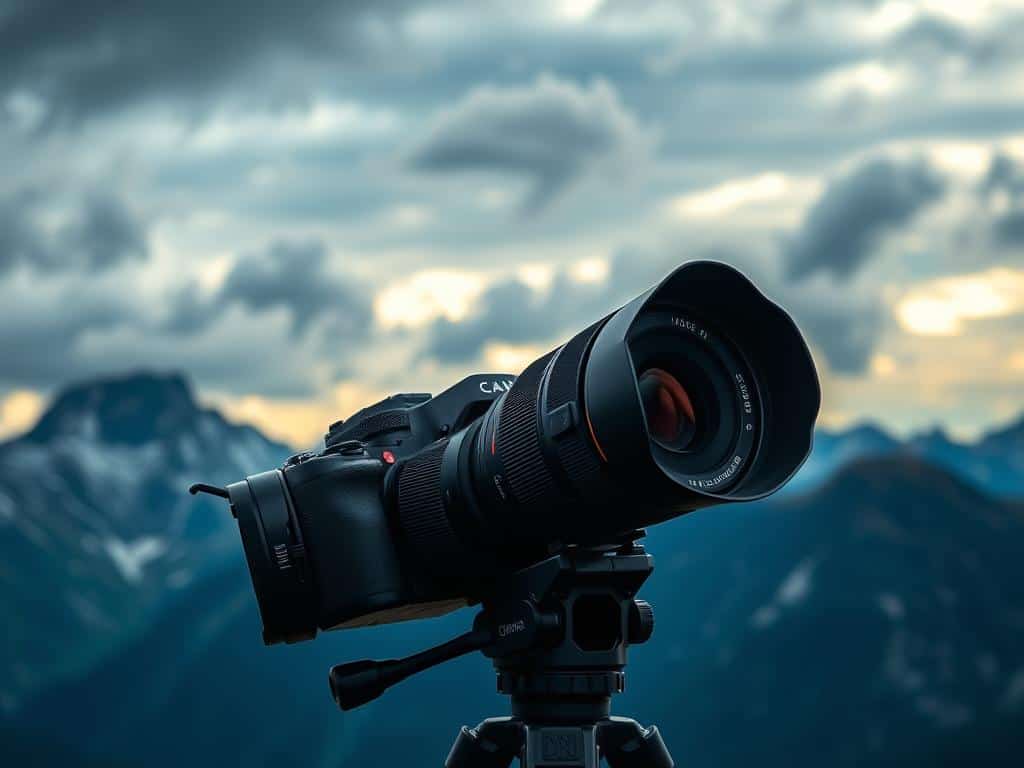
Choosing the right camera gear is key for adventure photography. The right outdoor photography equipment can make a big difference in your photos. I often use a DSLR for its great performance and flexibility.
It lets me change lenses for different scenes. I’ve also started using mirrorless cameras like the Sony a7 III. It’s light and does well in low light, and it shoots 4K video.
Selecting the Right Equipment
Choosing the right lens is important. I prefer versatile zoom lenses and fast prime lenses for action shots. The Sony 24-105mm F4 G lens is great for many needs, and the Tamron 28-75 f2.8 is more affordable.
For big landscapes, I use the Sony FE 16-35mm f/2.8 GM lens. For wildlife, the Sony FE 70-200mm f/2.8 GM lens is essential. I also have a DJI Mavic Mini drone for aerial shots.
Packing Considerations for Outdoor Adventures
Packing smart is key for outdoor photography. I keep my gear safe and easy to reach. A good camera bag, like those from Lowepro or Mountainsmith, protects against the elements.
I choose bags that are padded and waterproof. They hold lenses and accessories. For stable shots, I use lightweight tripods or the Peak Design travel tripod. I look for durable gear that’s not too heavy.
I use a sturdy camera strap and accessories like the Peak Design Clip for hands-free shooting. This is perfect for quick moments outdoors.
Conclusion
Capturing the perfect adventure photo is more than just knowing your camera. It’s about telling a story and loving the natural world. By learning about adventure photography, I can make images that show off beautiful landscapes and share deep feelings with my audience. Social media lets me share these moments with thousands, turning each photo into a story.
Thinking about what makes a great adventure photo, I remember the importance of packing right. Choosing the right gear and organizing it well means I’m ready for anything. Timing is also key; waking up early to catch the sunrise has led to some amazing shots. Learning these skills helps me capture not just what I see, but how I feel about it.
Every adventure I go on is a chance to take incredible photos that tell a story. By using composition, trying new angles, and focusing on emotion, I invite people to feel the journey. Adventure photography keeps inspiring me, and I look forward to sharing my experiences with others who love the outdoors.