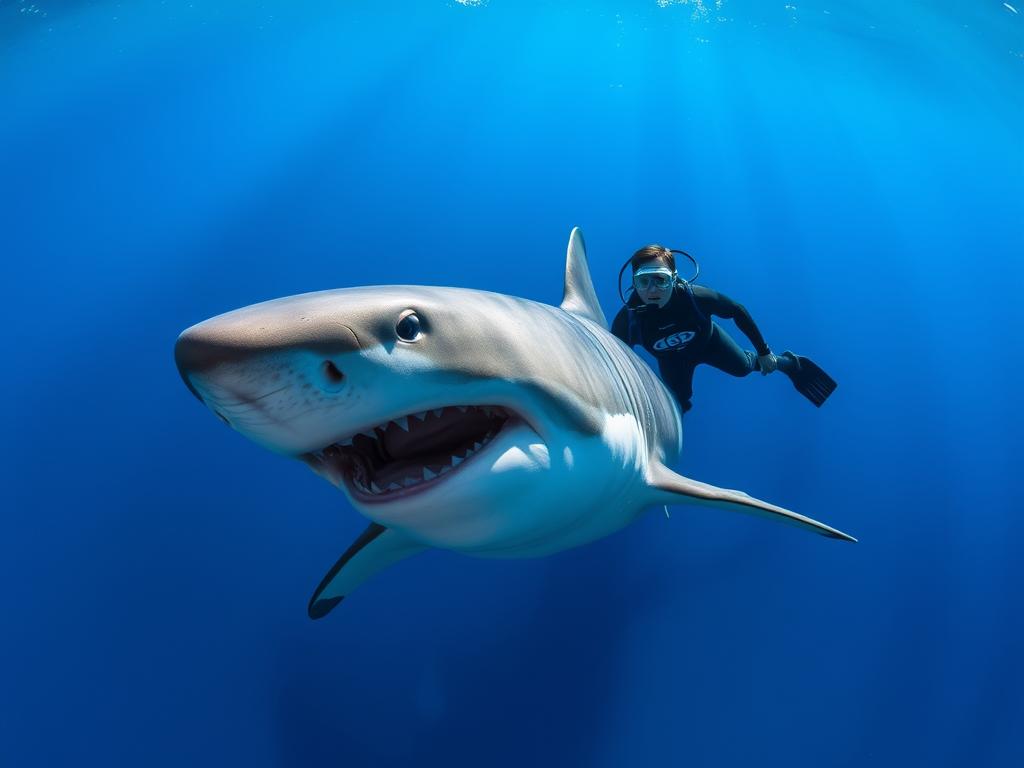
Did you know that just three miles off Oahu’s North Shore, there’s a spot for some of the world’s best shark diving? It’s not just about the thrill; it’s a chance to see these amazing creatures up close. Dive cages float just under the surface, so you can see sharks without scuba gear.
These dives are all about natural interaction. Sharks aren’t baited or scared to come near. It’s a way to learn to respect these often-misunderstood animals.
Shark diving is more than just a dive; it’s a deep connection with the ocean. It’s designed to be safe for both divers and sharks. Companies like One Ocean Diving, seen on Discovery Channel and National Geographic, lead safe and exciting dives.
Whether you’re a seasoned diver or new to the sport, shark diving is unforgettable. It’s a journey that changes your view of the ocean and its creatures.
Key Takeaways
- The dive experience occurs three miles off the North Shore in Oahu.
- Shark diving promotes natural interactions by never baiting or frightening the sharks.
- The program is safe and low-impact, focusing on both diver and shark wellbeing.
- One Ocean Diving supports conservation and educational outreach through proceeds from each dive.
- Participants of all skill levels can enjoy the thrill of diving with sharks.
- The experience is recognized for its credibility through major media features.
Understanding the Thrill of Shark Diving
Shark diving is thrilling and educational. It lets me see sharks in their natural home. I learn about their biology and behavior, which deepens my respect for marine life. Every dive is unique, filled with unforgettable moments.
What Makes Shark Diving Unique?
Shark diving gives a rush of adrenaline. It’s exciting to be close to ocean predators. It also teaches us about sharks’ importance in the sea.
In places like Guadalupe Island and Neptune Island, divers explore underwater. They see the beauty of shark interactions, like with great whites. These moments teach us to respect and understand these creatures.
Different Types of Sharks You May Encounter
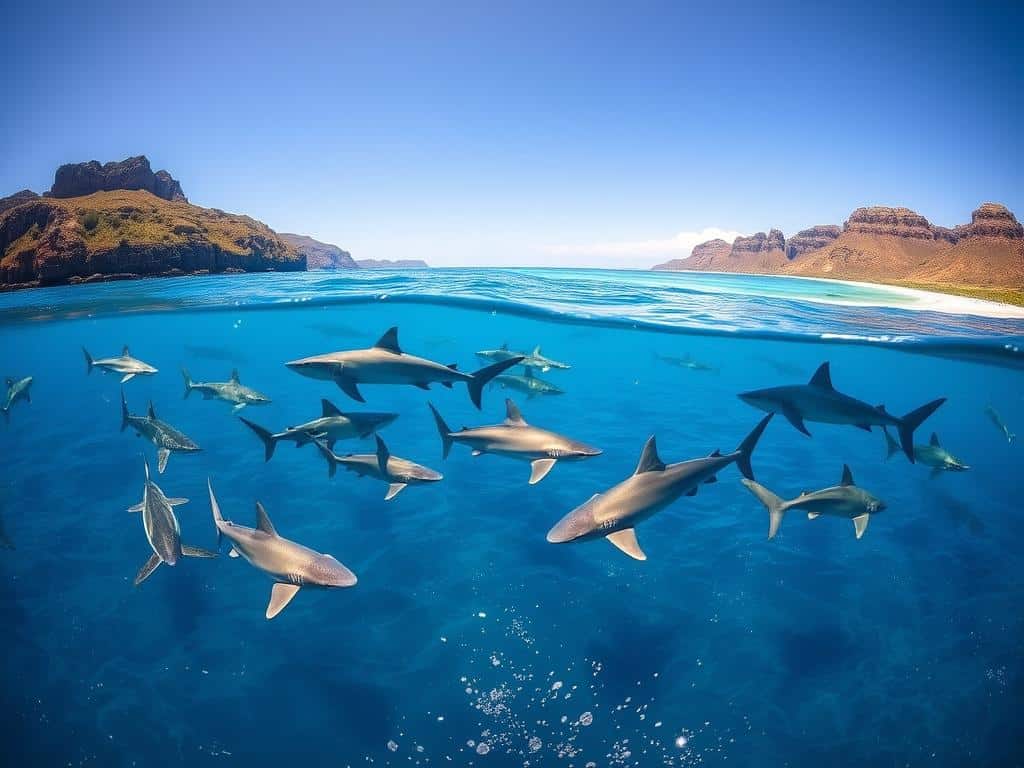
I’ve seen many shark species while diving. Each one adds to the sea’s diversity. From great whites to hammerheads and sand tiger sharks, every dive is a chance to learn.
Places like Tiger Beach in Grand Bahama and Fiji’s Coral Coast attract many sharks. These spots offer great views of their behavior in beautiful underwater settings.
The Ultimate Shark Diving Experience
Going on a shark diving adventure is thrilling and educational. You get to see amazing marine habitats around the world. Places like Hawaii and the Galapagos Islands offer great spots for both new and experienced divers.
Each place has its own special way of showing off sharks’ beauty and power.
Dive Locations: Where Can You Dive with Sharks?
There are top spots globally for shark diving. The Socorro Islands, 240 miles from Cabo San Lucas, Mexico, is one. Here, you can see whale sharks and silky sharks. The best time to dive is from November to May, when the water is warm.
In French Polynesia, Fakarava is known for its shark wall. This happens during the grouper spawning event, around the full moon.
The Bahamas are great for seeing great hammerhead sharks from February to April. Fiji’s Shark Reef Marine Reserve is another must-see, with eight shark species. Malapascua Island is perfect for thresher shark sightings.
Cage Diving Vs. Free Diving: Which is Right for You?
Deciding between cage diving and free diving depends on your comfort and experience. Cage diving is safer and lets you get close to sharks without risk. You stay in a steel cage for a safe view.
Free diving, on the other hand, is more personal. It lets you dive freely and connect deeply with the sea. But, you need to be experienced and fit to handle strong currents.
Shark Diving: Safety and Conservation
Shark diving is thrilling, but safety and caring for the ocean are key. It’s important to follow shark diving safety tips when diving with sharks. These rules help keep divers safe and support the health of the marine ecosystem.
Safety Protocols to Consider During Your Dive
Every dive operator must stick to strict safety rules. Wearing dark wetsuits and staying alert are key. Make sure your dive is right for your skill level. Avoid diving when it’s hard to see and stay out of the water at night unless with a guide.
Stay calm and don’t move suddenly to avoid scaring sharks. Dive operators should always have a first aid kit ready. Knowing about the sharks you might see makes the dive safer and more fun. It’s also good to report any bad diving practices to help protect sharks.
The Importance of Shark Conservation
Sharks are vital for the health of our oceans. Sadly, up to 73 million sharks are killed each year for their fins. This is illegal in most places. We need to support shark conservation efforts.
Shark tourism is a big help, bringing in over $314 million a year. It’s expected to grow to over $780 million in the next 20 years. By diving responsibly, we help local economies and protect sharks.
Knowing about shark conservation is important. Sustainable shark tourism helps marine life and raises awareness. Diving responsibly helps tell the story of shark conservation and lets us see these amazing creatures up close.
Conclusion
My journey into the ocean’s depths has shown me that shark diving is more than just a thrill. It’s a chance to learn about these amazing creatures and why we need to protect them. Sadly, about 73 million sharks are killed each year for their fins.
Being part of these dives has made me want to help sharks more. Studies from Australian universities show that diving can make people care more about the ocean. I’ve learned how important sharks are to our oceans, like the Great White, which is threatened.
When I dive with experts from places like One Ocean Diving, I see the joy and the good it does. These dives help clean beaches and teach people about the ocean. I hope future generations will get to see the ocean’s wonders and learn to protect it.