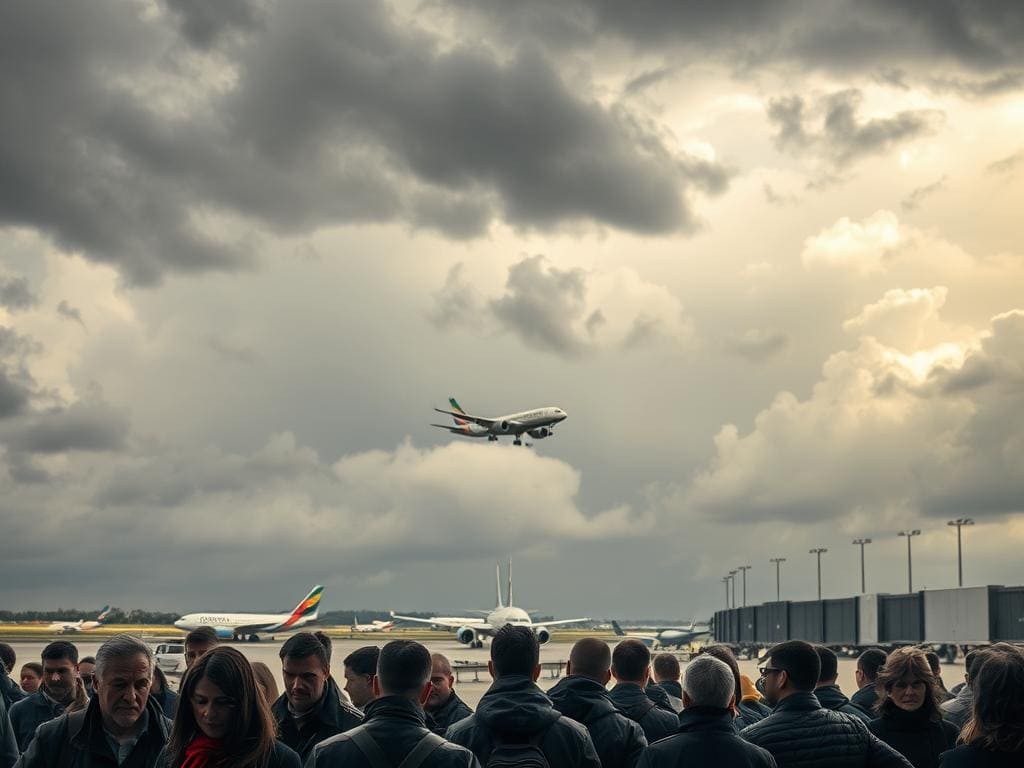
We’ve all been there, waiting in an airport, watching the clock. The excitement of travel quickly turns to frustration. Flight delays are a big part of our travel experience, affecting many of us every day.
From airport issues to technical problems, and weather, knowing why delays happen helps us. About 20% of flights are delayed. This means understanding the reasons is key to managing our travel plans.
I remember missing important events because of delays. It shows that delays affect real people. Let’s explore the reasons behind these delays to better handle air travel.
Key Takeaways
- About 20% of all flights face delays.
- Delays can be caused by weather impact, airline issues, and more.
- Common delay duration is often 15 minutes or less at major airports.
- Weather conditions, like at San Francisco International, affect airports a lot.
- Understanding these causes helps us manage our travel plans better.
Understanding the Causes of Flight Delays
Flight delays are a big problem for travelers. Knowing why they happen helps a lot. Weather, technical issues, and too much air traffic are main reasons. These factors affect how smoothly airports run and our travel experience.
Adverse Weather Conditions
Bad weather like storms, fog, or strong winds can really mess things up. It makes flying unsafe, so flights might be canceled or delayed. Airlines put safety first, which means sometimes flights are late.
Weather delays that are really bad don’t make airlines pay passengers. But, airlines must help travelers and keep them updated.
Technical Issues
Technical problems can pop up without warning, causing delays. Fixing engines, navigation, or hydraulics can mean flights are late. If a delay is over three hours, airlines must help with food and a place to stay.
Keeping planes safe is key, even if it means waiting longer. Airlines work hard to make sure of this.
Crowded Air Traffic
Too many planes in the air can cause delays, like at JFK or Chicago O’Hare. This makes landing or taking off wait longer. It shows how important good airport planning is.
These delays can spread, making travel plans even harder. It’s a big challenge for airports to manage.
Flight Delays: Impacts on Passenger Rights
Flight delays can really mess up your travel plans. It’s important for passengers to know their rights. Understanding if a delay qualifies for compensation can help ease worries.
Several factors decide if you’re due for compensation. These include the reason for the delay and the airline’s duties under U.S. laws.
Compensable vs. Non-Compensable Delays
Delays can be either compensable or non-compensable. If the delay is due to things the airline can control, like technical issues, you might get compensation. This could be meal vouchers or a place to stay, depending on how long you’re delayed.
But, if the delay is caused by bad weather, air traffic, or security, you usually won’t get compensation. Airlines have their own rules about this.
Airline Responsibilities
Airlines have to follow rules about passenger rights during delays or cancellations. Starting in October 2024, new rules require airlines to give automatic refunds for canceled or greatly changed flights. A big change is when the flight time changes by more than three hours at home or six hours abroad.
They have to refund within seven business days for credit card payments. This gives travelers more protection. Also, if your checked luggage is late, the airline must pay back baggage fees. This shows airlines’ commitment to their customers.
Conclusion
Exploring flight delays has shown me how complex they are. Weather, technical problems, and air traffic jams all play a part. Knowing these can help us deal with travel issues better.
Passenger rights are key when delays happen. Learning about airline compensations empowers us. It helps us know what to do when flights are canceled or delayed.
Being ready for delays means knowing the industry’s problems and our rights. This knowledge helps reduce stress from unexpected travel changes. It turns a bad situation into a more manageable one.