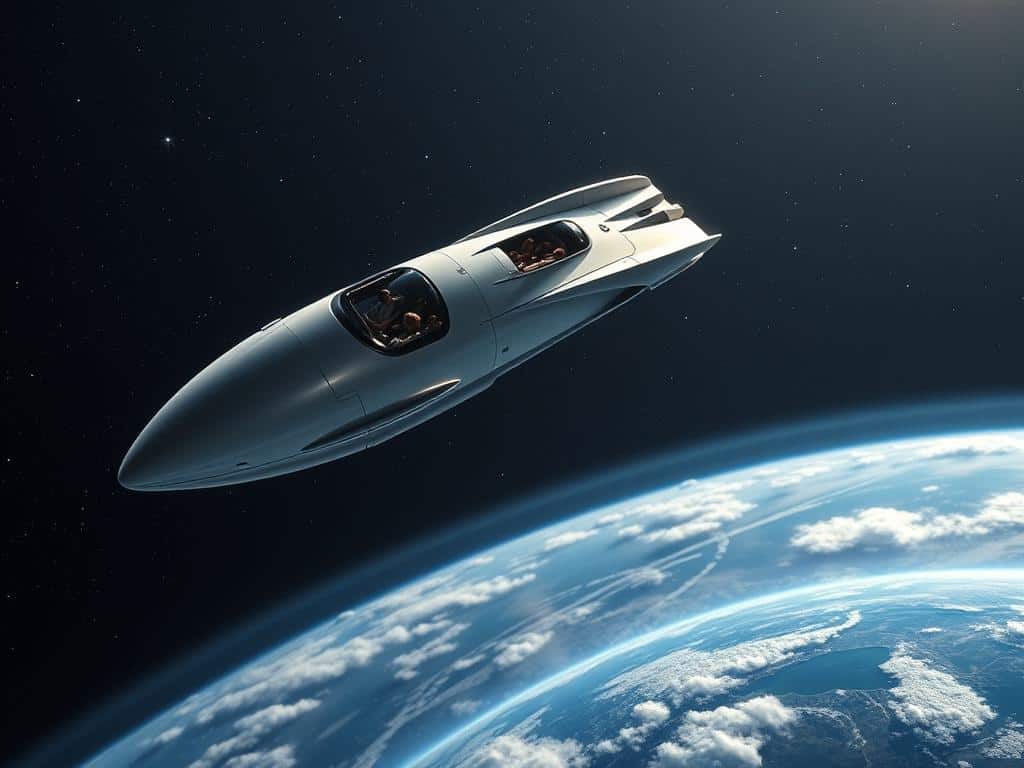
Did you know the global space tourism market is set to hit $3 billion by 2030? This huge growth marks a new era where people can enjoy space travel. Virgin Galactic’s VSS Unity has reached 80 kilometers, making space travel feel closer than ever.
Companies like Blue Origin and SpaceX are leading the way. They’re making trips to the edge of space a reality. Virgin Galactic already has over 600 people ready to fly, with tickets starting at $200,000. This industry is not just for the rich; it’s opening space to everyone.
Key Takeaways
- The space tourism market is estimated to reach $3 billion by 2030.
- Virgin Galactic’s VSS Unity reached 80 kilometers, considered the edge of space.
- Blue Origin’s crewed flights cross the Kármán Line at 100 kilometers.
- Ticket prices for Virgin Galactic start around $200,000.
- SpaceX aims to conduct missions to the Moon by as early as 2024.
- More than 600 passengers have booked flights with Virgin Galactic.
- The excitement of space tourism is rapidly changing what we know about access to outer space.
The Rise of Space Tourism
Space tourism has grown a lot from the early days of the space race. It started as a competition between the US and the Soviet Union. NASA’s Apollo missions were key milestones. They sparked human interest in space travel.
Dennis Tito became the first space tourist in 2001. This marked the start of private ventures in space tourism. It showed that civilians could reach for the stars.
Historical Context
NASA’s work made people excited about space. This led to the idea of suborbital flights for tourists. Over time, rules and market trends made space travel more appealing.
The Ansari X Prize in 2004 was a big step. It showed reusable spacecraft were possible. This pushed space tourism closer to reality.
Current Companies Leading Space Tourism
Now, many companies are leading in space tourism. Virgin Galactic flew its first crewed suborbital flight in 2021. Passengers got to feel weightlessness briefly.
Blue Origin launched its New Shepard rocket in 2021. It took Jeff Bezos and three others on a suborbital trip. This made headlines.
SpaceX’s Inspiration4 mission was a historic all-civilian orbit in 2021. Ticket prices for suborbital flights are $200,000 to $500,000. Orbital flights can cost over $60 million.
Other companies, like Axiom Space, are working on making space travel more accessible. They plan private missions to the International Space Station.
Suborbital vs. Orbital Space Flights
Space tourism has changed a lot, giving us new ways to explore the universe. We can choose between suborbital and orbital flights. Each offers its own special experiences and challenges for those who want to go to space.
Understanding Suborbital Flights
Suborbital flights are perfect for those who love adventure. Companies like Virgin Galactic and Blue Origin offer these trips. They take you up to about 50 to 70 miles high, where you can feel weightless for a few minutes.
These flights last about 11 minutes and cost between $200,000 and $900,000. They’re designed to be exciting and affordable, for those who want to experience space.
Orbital Space Missions
Orbital flights are a different story. They reach speeds of 17,500 mph, putting you in orbit around Earth. This is the first step to reaching places like the International Space Station, 254 miles up.
These trips are pricier, costing around $50 million to $100 million per seat. But they offer longer experiences, lasting longer than suborbital flights. About 95% of space flights are orbital, showing their popularity for deeper space adventures.
The Cost and Preparation for Space Tourism
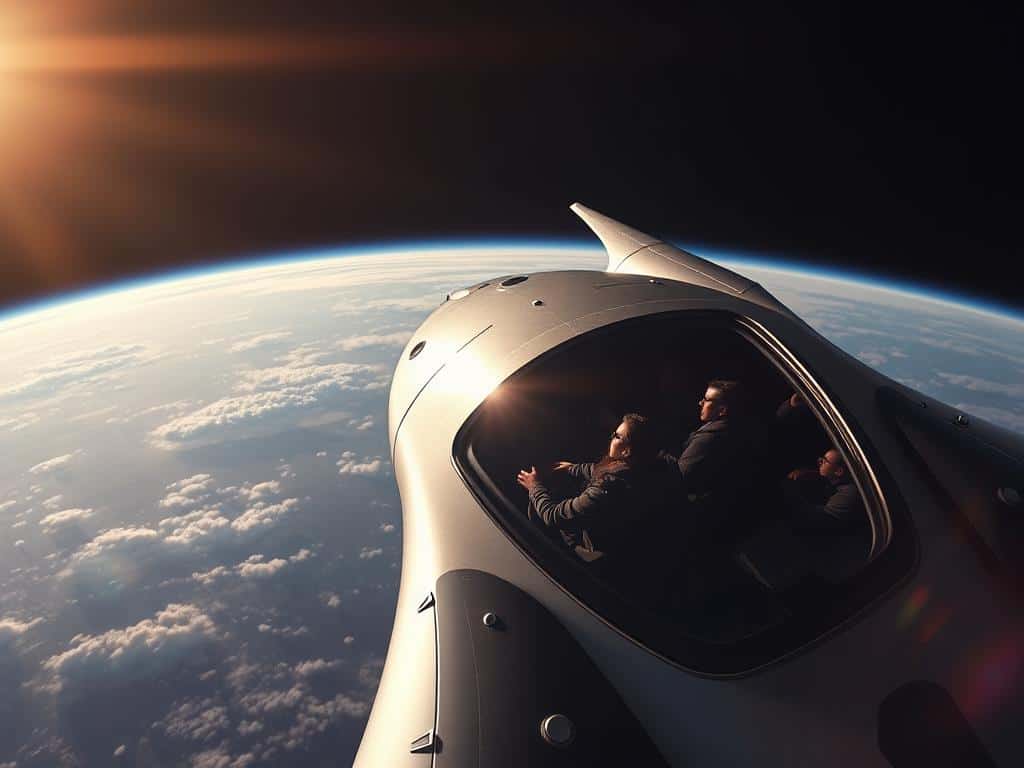
Space tourism is becoming more popular, and knowing the costs is key. The prices vary based on the experience you want. For example, suborbital flights can cost between $75,000 and $250,000.
The price depends on the company and the type of flight.
Pricing for Space Tours
XCOR Aerospace sells suborbital space tickets for $95,000. Virgin Galactic offers a guaranteed seat for $250,000 after a three-day training. SpaceX’s orbital flights to the International Space Station cost about $55 million per person.
These high prices show the detailed preparation and safety needed for space travel.
Training and Medical Requirements
Getting ready for space tourism means a lot of training. This training can last for days and includes simulations and safety lessons. You also need to pass medical checks to make sure you’re healthy enough for space.
It’s all about safety. Passengers must sign agreements that explain the risks of space travel.
Conclusion
The future of space tourism is about to change a lot. Companies like Virgin Galactic, Blue Origin, and SpaceX are leading the way. Soon, regular people will get to see the cosmos and have amazing experiences.
These trips will be thrilling and also make us think about big issues. We’ll have to consider how they affect our planet and society.
Right now, space trips are very expensive. But prices might drop soon, making them more affordable. The stories of early space travelers show how powerful these experiences can be.
They help us feel closer to our planet and the universe. Yet, we must worry about the environmental and social problems that might come with it.
Space tourism is not just about cool trips. It’s about bringing people together and making us think globally. By giving back and being eco-friendly, we can make space travel good for everyone.
This new era of exploration could teach us a lot about the universe. It could also make us more aware of our planet’s needs.