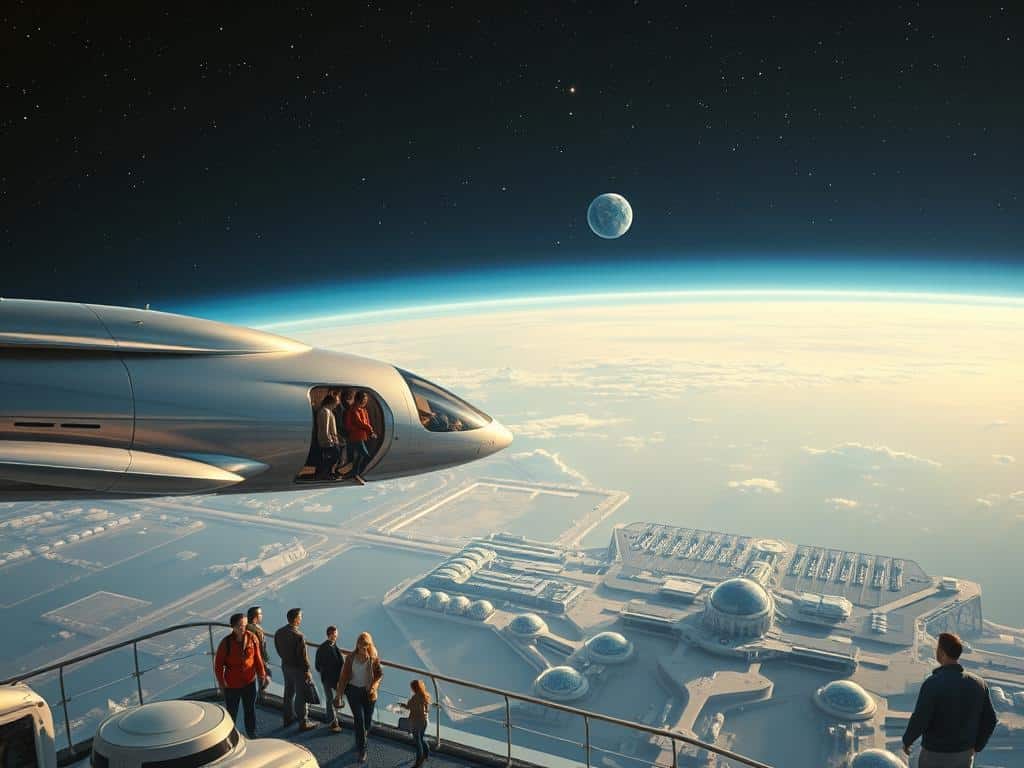
Space tourism is now a real thing, not just a dream from science fiction. Companies like SpaceX, Blue Origin, and Virgin Galactic are leading the way. They are making huge strides in space travel.
About 3,000 to 4,000 people are waiting to go to space. Virgin Galactic has flown its seventh group of paying passengers. Blue Origin’s prices range from $200,000 to over $1 million, showing there’s something for everyone.
These companies are working on new tech, like Virgin Galactic’s Delta spaceships. This means we’re getting closer to experiencing space travel for ourselves.
The future of space travel is exciting. Private astronaut flights might start again in 2026. SpaceX could even land on the Moon as early as 2024. With each launch, we’re getting closer to unforgettable space adventures.
Key Takeaways
- Thousands of people are currently on waiting lists for trips to space, reflecting growing interest in space tourism.
- Virgin Galactic has conducted seven flights with paying passengers, starting in June 2023.
- Ticket prices for Virgin Galactic’s spaceflights are reported to be around $450,000, with average prices soaring over $800,000.
- Blue Origin offers tickets ranging from $200,000 to more than $1 million for their commercial spaceflights.
- The first flight for Space Perspective is scheduled for 2027, with a waiting list of about 800 names.
The Current Landscape of Space Travel
Exploring space travel is truly captivating. The fast pace of progress in this field is amazing. Companies like SpaceX are leading the way, pushing the limits of space exploration. Their missions are setting the stage for humans to explore beyond Earth.
Overview of SpaceX Missions
SpaceX is changing the game in space travel. They use reusable rockets, making space travel cheaper and more accessible. Their crewed launches are a big step forward, with more missions planned for the year.
The Crew-10 mission is set for March 12. It will send astronauts to the International Space Station. These efforts show how technology is advancing and our interest in space is growing.
Key Launch Dates
Keeping up with launch dates is important for space enthusiasts. March will see the launch of Beta Starlink V2 Mini satellites and Transporter-13. These events show the busy schedule in commercial spaceflight.
By following these launch logs, we can see how commercial space travel is evolving. It’s exciting to watch this field grow and expand.
Understanding Space Tourism
Space tourism is growing, bringing new economic chances. Companies like SpaceX, Virgin Galactic, and Blue Origin are leading the way. They plan to offer suborbital and orbital flights.
Dennis Tito became famous in 2001 as the first space tourist. He paid about $20 million for a trip to the International Space Station. This started an exciting journey into space tourism, attracting more people to space travel.
Commercial Opportunities in Space Travel
Space tourism could become a huge industry. As more companies join, ticket prices might drop. Virgin Galactic, for example, sold hundreds of seats for suborbital flights at around $300,000.
This is much cheaper than the $20 million for a seat with Roscosmos. SpaceX’s Inspiration4 showed private citizens can orbit Earth. This growing interest has led to educational efforts to make space travel more accessible.
Challenges in Space Tourism
Despite the opportunities, the industry faces challenges. Regulatory hurdles and safety concerns are big issues. The public sees space tourism as a luxury, which might limit its appeal.
Only a few have gone to space, making it seem exclusive. To grow, the industry must improve safety and make space travel more accessible. Companies need to address costs, safety, and public perception to welcome more people.
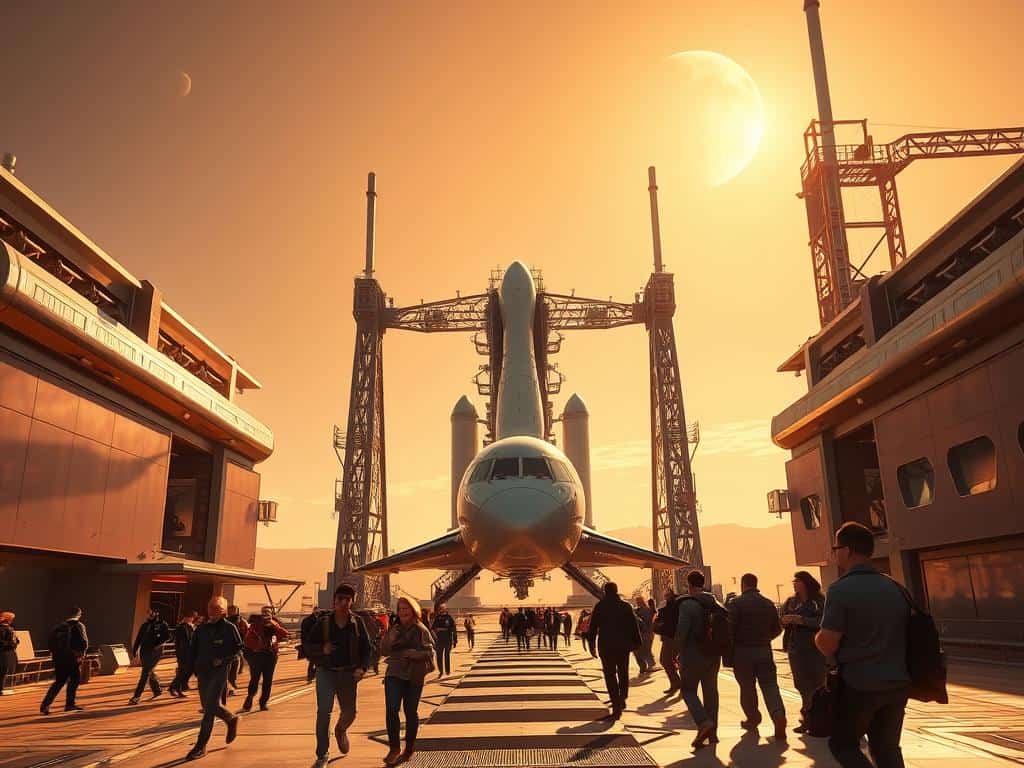
The Future of Space Travels: Mars and Beyond
Exploring Mars is a big step for future tourism and human space travel. NASA and private companies are working hard to make Mars trips possible. They aim to understand the challenges and innovations needed for life on Mars.
Targeting Mars for Human Exploration
Mars exploration excites many people. NASA plans to send humans to Mars by the 2030s. This is a thrilling time for those who dream of interplanetary travel.
Technologies are being developed to tackle Mars’ unique challenges. For example, MOXIE is creating oxygen from the Martian atmosphere. This is key for fuel and breathing.
Spacecraft must face dust storms and energy issues to succeed. They need strong engineering and new tech to protect astronauts. Life-support systems are also a top priority, focusing on recycling resources.
Getting ready for Mars involves teamwork in space tourism. This shift shows a move from government to commercial efforts. SpaceX and Blue Origin are leading in space travel tech, setting the stage for a growing market.
Conclusion
Space tourism is changing fast, marking the start of a new space travel era. New tech and more people wanting to go to space mean we might all get a chance soon. Companies like SpaceX, Blue Origin, and Virgin Galactic are leading the way, but tickets are very expensive, over $1 million.
There are big challenges, like the harm rockets do to the environment and keeping everyone safe. Rocket emissions are a big problem, and we need to fix it as more people go to space. But, if we work on making space travel better, prices might drop. This could let hundreds of thousands of people fly to space every year.
Thinking about these changes, it’s clear space travel is not just a dream but something we can do. With new tech, cheaper tickets, and more flights, space will soon be for more than just the rich. The buzz around space tourism is growing, and I’m excited to see where this journey takes us.