Thinking about aviation, the Concorde stands out as a symbol of innovation. It was a dream of fast travel, reaching speeds over 1,300 miles per hour. For nearly three decades, it amazed us, cutting travel time in half.
But, this symbol of speed met a tragic end. It raises many questions and emotions. What led to its downfall? To understand, we must look at its history. It’s a story of innovation and challenges that shaped its legacy.
Key Takeaways
- The Concorde was a groundbreaking advancement in supersonic travel, holding the record for speed.
- A high operational cost contributed significantly to the Concorde’s ultimate failure in profitability.
- Environmental concerns regarding noise and fuel consumption challenged its viability.
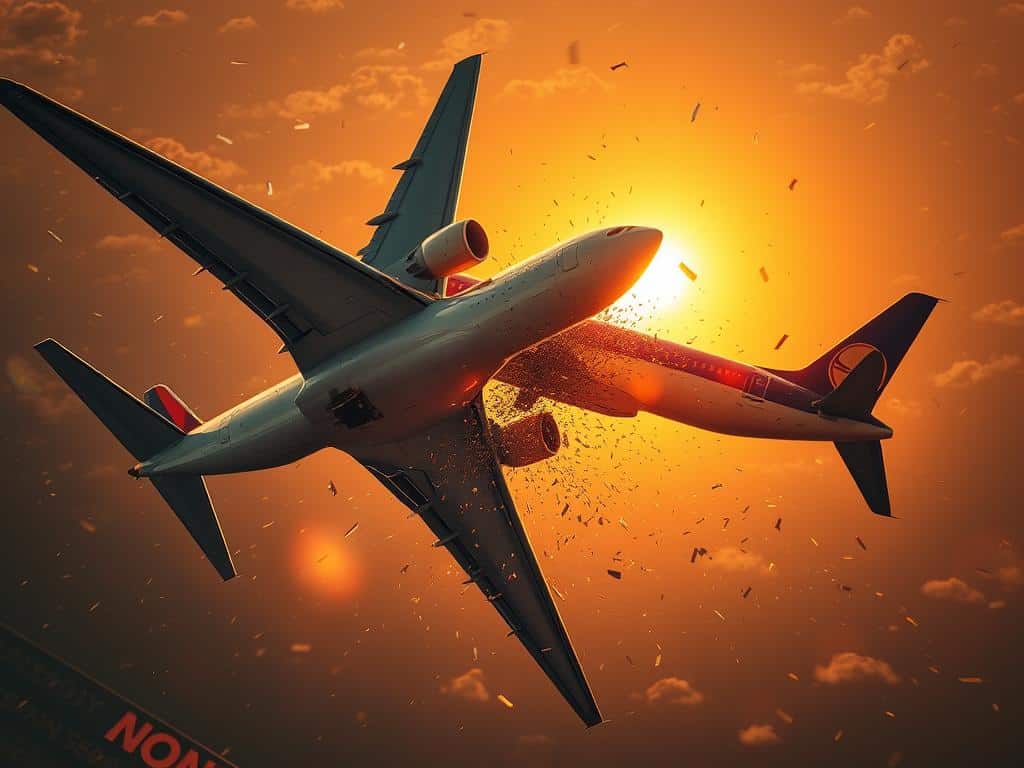
- The crash of flight 4590 in 2000 marked a turning point in public perception and usage of the aircraft.
- The legacy of the Concorde continues to influence modern considerations of future supersonic travel.
The Rise of the Concorde
The dream of flying faster than sound began during the Cold War. Britain and France joined forces in 1962 to make this dream real. They worked together to create the Concorde, aiming for the fastest travel for the rich.
This plane was not just fast. It was also luxurious, attracting famous people who wanted a special travel experience.
The Vision Behind Supersonic Travel
The Concorde changed air travel for those who value time and comfort. It flew at 1,350 mph, cutting travel times in half. For instance, London to New York was just 3.5 hours, compared to 8 hours before.
By focusing on the needs of the wealthy, Concorde became the pinnacle of aviation innovation.
Technical Innovations
The Concorde’s technology was groundbreaking. It flew at 60,000 feet, above most planes. Its Rolls-Royce engines produced 38,000 pounds of thrust each.
The plane’s delta wing shape made it aerodynamically superior. It had a special droop nose for better visibility during takeoff and landing. The Concorde was the first to use computer technology for engine air intake.
Challenges Leading to Concorde’s Downfall
The Concorde’s journey was filled with big challenges that led to its decline. It was a symbol of aviation’s technological achievements. But, the real-world problems it faced were too much to handle.
High Operating Costs
The Concorde operating costs were a big problem. Each flight used 6,771 gallons of fuel, hurting the airline’s profits. Tickets cost around $12,000 for a round trip, which is about $66,000 today.
The cost to develop the Concorde was $1.44 billion for both the British and French governments. This made people talk a lot about aviation economics. Also, only 20 units were made. This meant Air France and British Airways couldn’t save money by making more.
Noise and Environmental Concerns
The Concorde’s loud sonic booms were a major issue. Aviation noise rules stopped it from flying over land. This made people upset and worried about its environmental impact.
New rules made by environmental groups saw the Concorde as a big polluter. This made it hard for the Concorde to be accepted. The strict supersonic restrictions didn’t help either.
Concorde’s Legacy
The Concorde’s story is a key part of aviation history. It shows both the highs and lows of flying fast. The Concorde’s journey teaches us important Concorde lessons for the future of flying.
Though it was a marvel of engineering, it had to stop flying. This teaches us about the challenges of flying fast. We must learn from these lessons to make flying faster again.
Lessons Learned from Its Failure
The Concorde faced big supersonic failures. It was too expensive to fly, costing about $12,000 an hour. This high cost made it hard to keep flying.
Aviation needs to be affordable to succeed. The Concorde’s story shows that money matters as much as technology. We must think about cost when we innovate in the skies.
The Future of Supersonic Travel
The future of flying fast looks promising. Companies like Boom Supersonic and Spike Aerospace are working on new ideas. They aim to solve the problems the Concorde faced, like being too loud and using too much fuel.
New designs and materials could make fast flying better for the planet. As places like Asia and the Middle East grow, they want faster travel. This makes finding a new fast jet even more important, building on the Concorde’s legacy.
Conclusion
The Concorde’s story is a fascinating look at the highs and lows of supersonic travel. Only 20 aircraft were made, showing its journey was both impressive and tough. It went from its first flight in 1969 to its last in 2003.
Despite hopes for 350 units, only 14 were used by Air France and British Airways. The Concorde was a marvel of engineering. But, it faced high costs, environmental worries, and tragic crashes like Air France Flight 4590.
Its fuel use was a big issue, making it less appealing than other options. This shows the Concorde’s big problem: it was fast and luxurious but not practical or safe enough.
Yet, I’m hopeful about the future of supersonic travel. The Concorde’s story teaches us valuable lessons. These lessons will help make new planes better and more sustainable.
As we move forward in aviation, the Concorde’s legacy is key. It reminds us that while dreams are important, being flexible is key to success.