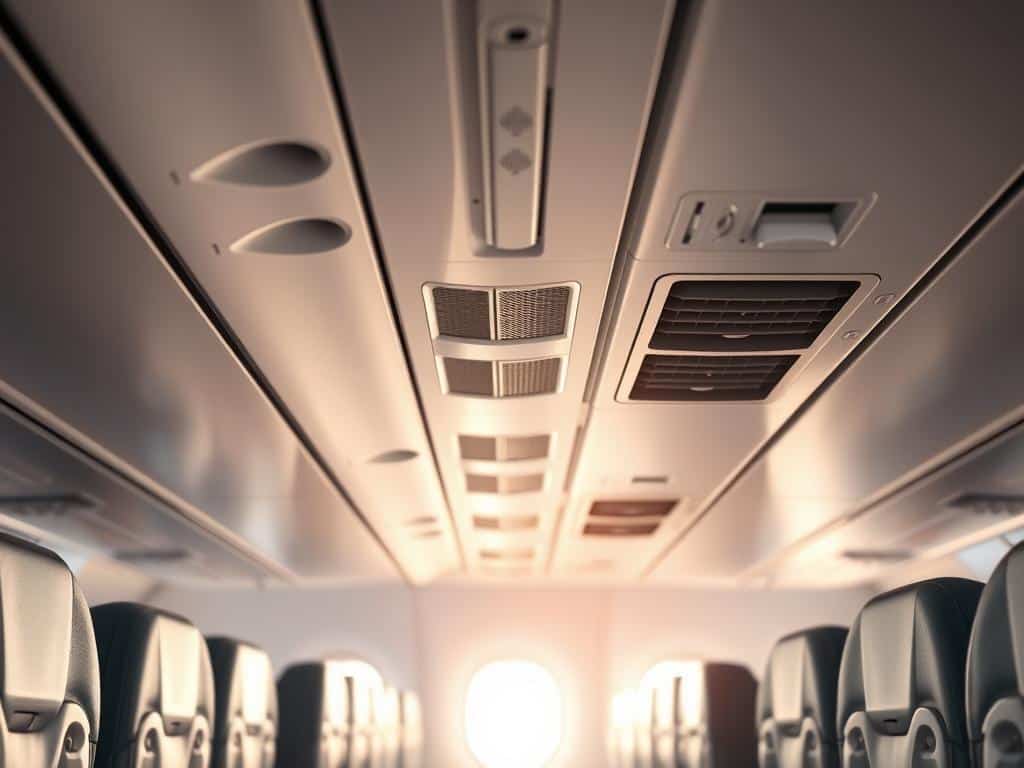
As I settled into my seat on the last flight to New York, the cabin crew began their routine safety demonstration. Yet, amid the familiar sounds of luggage being stowed and seatbelts fastening, a nagging question crossed my mind: How safe is the air I’m breathing up here? With a surge of curiosity, I recalled hearing about air quality concerns in airplanes. It’s a topic that has piqued the interest of frequent travelers and health-conscious passengers alike.
After all, I had heard that the air quality on commercial flights is dramatically different from that in regular office buildings. The airline industry has made strides, but lingering questions about risks remain. This article will dive into the complexities surrounding airplane cabin air quality, exploring the science behind bleed air, how it’s managed, and the implications for my travel health.
Key Takeaways
- Airplane air is refreshed 20-30 times an hour, significantly more than typical office spaces.
- About 50% of cabin air is HEPA-filtered, removing viruses impressively.
- Aerosol particles typically don’t linger in cabins for long, thanks to high air exchange rates.
- Research indicates seating proximity on planes can be safer than crowded indoor spaces.
- Relative humidity in aircraft cabins is low, which can impact comfort levels.
Understanding Airplane Cabin Air Quality
Airplane cabin air quality is very important for everyone on a flight. It’s amazing how planes keep their air clean, but it’s not always easy. The use of bleed air helps keep the air safe and comfortable at high altitudes.
Many things can affect the air quality in a plane. This includes how high the plane is flying and how well the engines are working. Even small problems with the plane can make the air less safe.
What is Bleed Air?
Bleed air comes from the plane’s engines or auxiliary power units (APUs). It’s used to pressurize the cabin. This is very important at high altitudes where the air pressure is much lower.
Older planes used traditional methods for bleed air. But newer planes, like the Boeing 787 Dreamliner, use electric compressors. This makes the air cleaner and reduces the chance of harmful contaminants.
Factors Affecting Air Quality in Flight
Many things can change the air quality in a plane. These include how high the plane is flying and how well the engines are working. Any problems with the plane can also make the air less safe.
U.S. commercial airlines use HEPA filters to keep the air clean. These filters remove at least 99.97% of harmful particles. Other systems, like activated carbon filters and UVGI, also help keep the air healthy.
Even with these systems, there are always risks of contamination. This is why it’s so important to keep researching and monitoring the air quality in planes.
The Risks Associated with Contaminated Cabin Air
The air inside an airplane cabin can be harmful to everyone on board. It can cause health problems, including Aerotoxic Syndrome. This condition happens when people breathe in toxic fumes during flights.
Aerotoxic Syndrome: Facts and Effects
Aerotoxic Syndrome is a serious health issue linked to cabin air pollution. It often shows up after fume events, when harmful substances mix with air. Aircrew usually face worse symptoms than passengers, like dizziness and memory problems.
Long-term exposure to these toxins can lead to serious health issues. This highlights the need for better cabin air safety.
Toxic Contaminants in Cabin Air
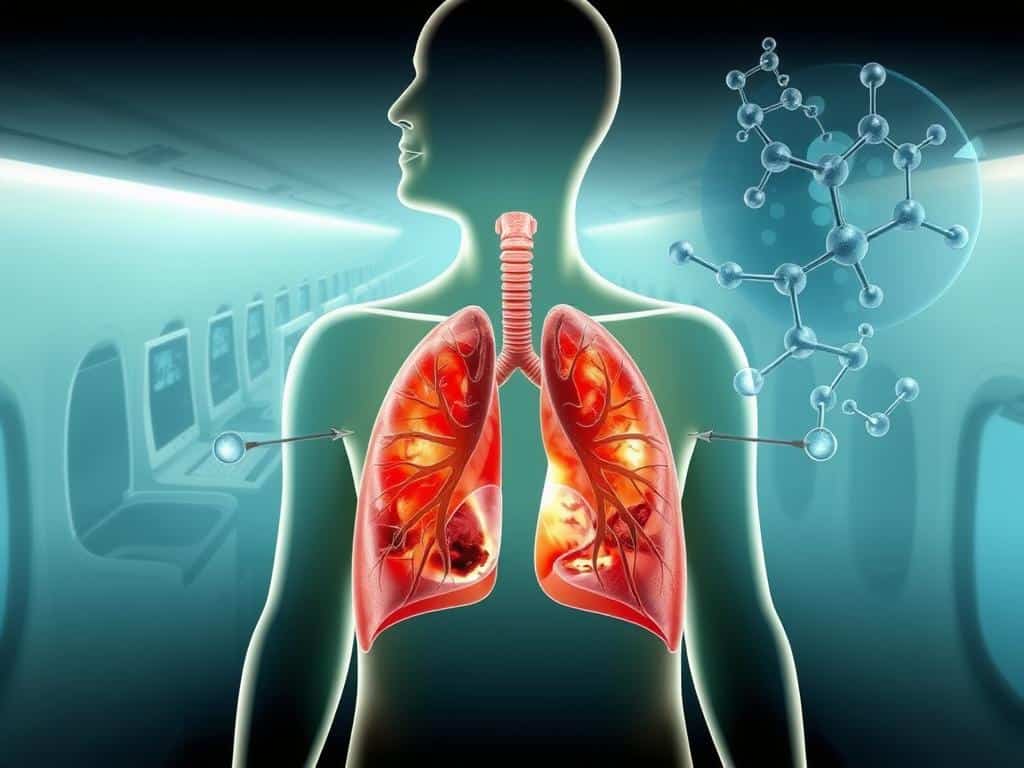
Contaminated cabin air contains harmful substances like volatile organic compounds and neurotoxins. These can damage brain function and cause serious health problems. Symptoms include asthma, memory loss, and vision issues.
Most commercial jets use engine bleed air for pressurization. Fixing this issue is key to making flights safer and reducing health risks for everyone.
Health Impacts of Cabin Air Pollution
Breathing polluted cabin air can harm your health. It can cause immediate and long-term problems, mainly for those who are more vulnerable. Knowing about these risks can help you stay safe while flying.
Short-term vs Long-term Effects
Short-term effects of cabin air pollution can make you feel uncomfortable right away. You might get eye, nose, and throat irritation, headaches, nausea, and feel tired. These symptoms usually go away within hours to days. It’s important to know about these quick reactions.
Long-term effects are more serious, affecting vulnerable groups the most. They might lead to chronic respiratory problems and neurological disorders. While studies say long-term risks are unlikely, it’s important to keep watching for them.
Vulnerable Groups and Health Risks
Some groups are more at risk from cabin air pollution. Children, the elderly, and pregnant women are more sensitive. People who fly often are also at higher risk because they’re exposed more.
It’s key to understand these risks to keep the conversation going about aviation health and safety.
Conclusion
The air on airplanes is often fresher than in many buildings, thanks to HEPA filters and air changes every 2 to 3 minutes. Yet, dangers from airborne toxins in cabin air are a big worry. With air travel growing 6% each year, making cabin air safer is key.
New tech, like Boeing’s 787 model, could make air travel healthier. Even with FAA rules and filters, pollutants like CO and ozone can be a problem. So, keeping an eye on air quality is vital.
More people are talking about aerotoxic syndrome, which means we need better air on planes. It’s up to regulators and plane makers to keep improving air quality. This will make flying safer and healthier for everyone.