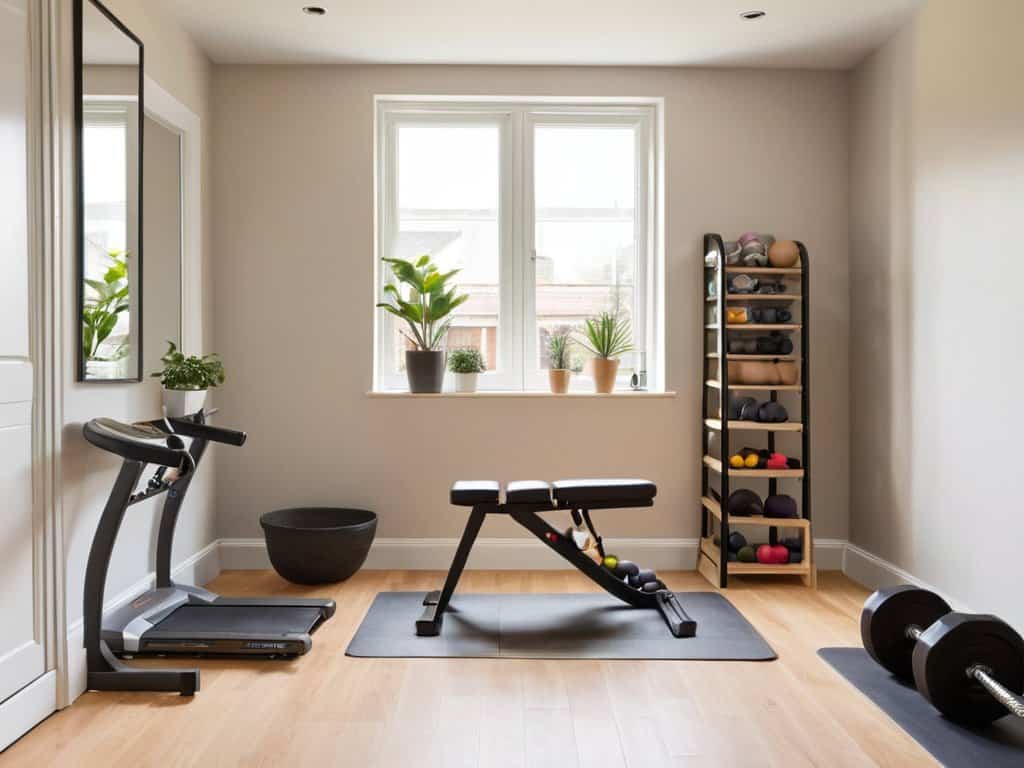
I still remember the day I decided to turn a corner of my family’s bed and breakfast into a home gym in a small space. It was a challenge, to say the least, but I was determined to prove that you don’t need a sprawling room to stay fit. The common myth that you need a lot of space to build a home gym is just that – a myth. With a little creativity and the right guidance on how to build a home gym in a small space, you can create a functional and efficient workout area even in the coziest of spaces.
As someone who’s been in your shoes, I know how frustrating it can be to feel like you’re limited by your space. But I’m here to tell you that it’s not about the size of the room, it’s about making the most of what you have. In this article, I’ll share my personal experience and practical advice on how to build a home gym in a small space, from choosing the right equipment to optimizing your layout for maximum efficiency. You’ll get honest and actionable tips that will help you create a home gym that fits your needs and your space, without breaking the bank or sacrificing your sanity.
Table of Contents
Project Overview
Total Time: 4 hours 30 minutes
Estimated Cost: $500 – $1000
Difficulty Level: Intermediate
Tools Required
- Tape Measure (for accurate measurements)
- Level (to ensure proper installation)
- Drill (with screwdriver and drill bits)
- Wrench (for tightening bolts)
- Saw (for cutting 2-in x 4-in lumber)
Supplies & Materials
- 2-in x 4-in lumber (for shelving and framing)
- Plywood (for flooring and platform)
- Resistance bands (for various exercises)
- Dumbbells (in different weights)
- Kettlebells (in various sizes)
- Exercise mat (for flooring and comfort)
- Mirrors (for walls to create illusion of larger space)
Step-by-Step Instructions
- 1. First, let’s assess the space we’re working with. Take a good look around the area you’ve designated for your home gym and consider the dimensions, the location of doors and windows, and any obstacles that might affect the layout. I like to think of this step as “_mapping out the terrain_” before embarking on an adventure – you need to know the lay of the land to plan your route.
- 2. Next, define your fitness goals. What kind of workouts do you want to do in your home gym? Are you a weightlifter, a yoga enthusiast, or a cardio fanatic? Knowing what you want to achieve will help you decide what equipment to prioritize and how to design the space for maximum efficiency. For me, it’s about creating a space that fosters _mind-body connection_ and allows for a variety of exercises to keep things interesting.
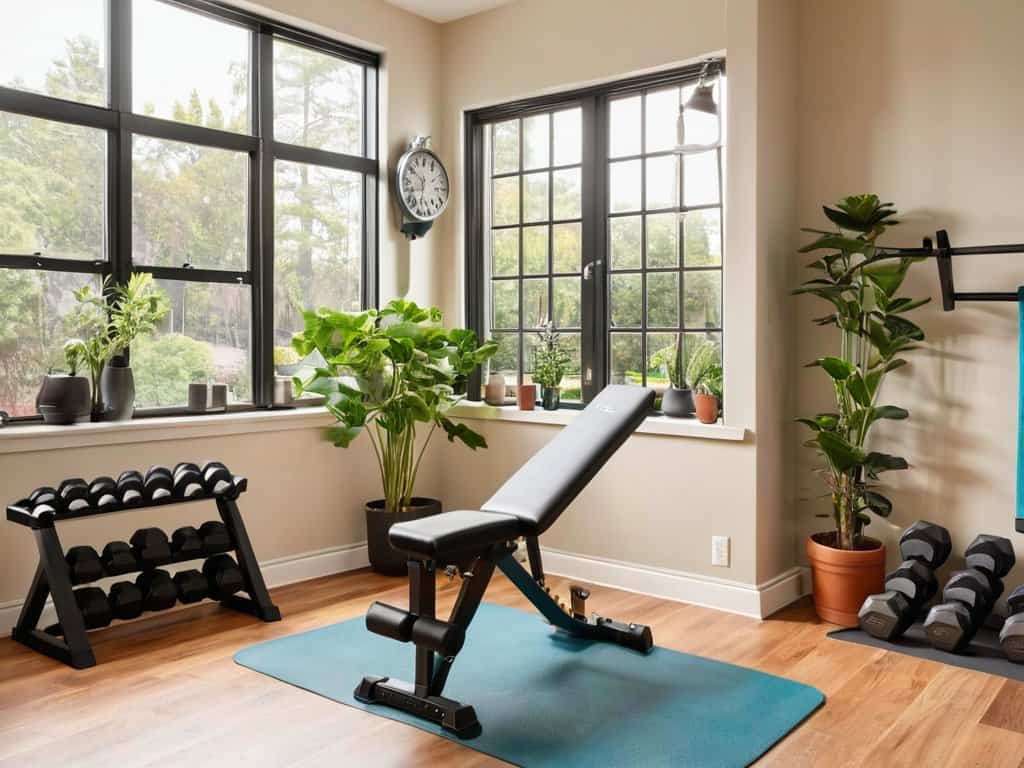
- 3. Now, let’s talk about equipment selection. You don’t need a lot of space to have a great workout, but you do need the right tools for the job. Consider multi-functional equipment like a pull-up bar that can also serve as a bar for dips, or a set of adjustable dumbbells that can replace an entire rack of weights. I’m a big fan of _space-saving solutions_ that still deliver a full-body workout.
- 4. With your equipment in mind, it’s time to design the layout of your home gym. Think about the flow of your workouts and how you can arrange your equipment to minimize wasted space and maximize efficiency. Consider a “_zone-based_” approach, where you group similar activities together – for example, a strength training zone and a cardio zone. Don’t forget to leave some empty space for stretching and moving around.
- 5. Once you have a plan, it’s time to start building. Begin with the basics like flooring and lighting. You’ll want a floor that can withstand heavy equipment and impact, and lighting that’s bright enough to see what you’re doing but not so harsh that it’s uncomfortable. I recommend _high-quality, shock-absorbing flooring_ to protect both your joints and your equipment.
- 6. Now it’s time to install your equipment. Make sure everything is securely fastened to the floor or walls to prevent accidents, and consider hiring a professional if you’re not comfortable with the installation process. Don’t skip this step – safety first is always the best policy when it comes to your home gym.
- 7. Finally, add some personality to your space. Your home gym should be a place where you feel inspired to work out, not a sterile environment that feels like a chore to visit. Add some _motivational quotes_, plants, or artwork that reflects your personality and makes you feel good. For me, it’s about creating a space that feels like a _personal sanctuary_ – a place where I can escape the stresses of everyday life and focus on my well-being.
Sweat Sanctuary Found
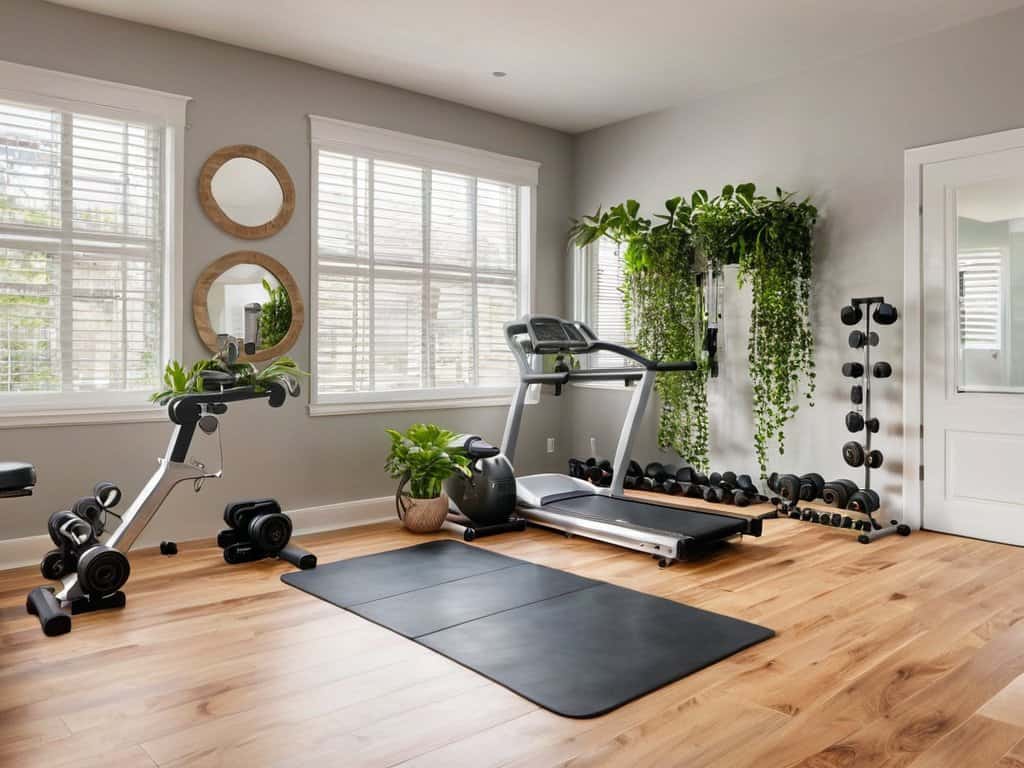
As I reflect on my own journey of creating a home gym in a small space, I realize that it’s all about embracing creativity. One of the most crucial elements is selecting the right multi-functional gym machines that can cater to a variety of exercises without taking up too much space. This not only helps in optimizing the available area but also ensures that you have a versatile workout routine.
When it comes to space saving workout ideas, it’s essential to think outside the box. Consider investing in affordable home gym equipment that serves multiple purposes, such as a resistance band that can be used for strength training and stretching. Additionally, don’t overlook the importance of gym flooring options for home that can provide a comfortable and safe surface for your workouts.
To take your home gym to the next level, explore home gym design inspiration that focuses on functionality and aesthetics. Look for ideas that incorporate small space exercise routines into the design, making the most of your available space. By doing so, you’ll create a sweat sanctuary that not only helps you achieve your fitness goals but also becomes a peaceful retreat in the comfort of your own home.
Affordable Gym Equipment for Cozy Corners
As I transformed my own tiny B&B gym, I discovered that affordable doesn’t have to mean flimsy. I opted for a compact treadmill, a set of adjustable dumbbells, and a resistance band system that could be easily stowed away. These space-savvy investments allowed me to create a sweat sanctuary that’s both functional and cozy. For instance, the resistance bands have become a staple in my workout routine, providing a full-body challenge without taking up valuable floor space.
By choosing multi-purpose equipment like these, you can turn even the most compact areas into a fitness haven, all without breaking the bank.
Small Space Exercise Routines Unleashed
As I’ve discovered in my own tiny B&B gym, the right exercise routine can turn even the coziest of spaces into a sweat sanctuary. I’ve found that bodyweight exercises like push-ups, squats, and lunges are perfect for small spaces. You can also incorporate yoga or Pilates for a low-impact, high-intensity workout. For me, it’s about mixing it up and keeping things fresh – just like trying out a new local folk dance on my travels!
I love unleashing my inner adventurer in these compact workout sessions, and I think you will too. Whether you’re a fellow traveler or just starting out, remember that every move counts, and every space can be transformed into a haven for fitness and fun.
Squeezing Fitness into Tight Spots: 5 Essential Tips
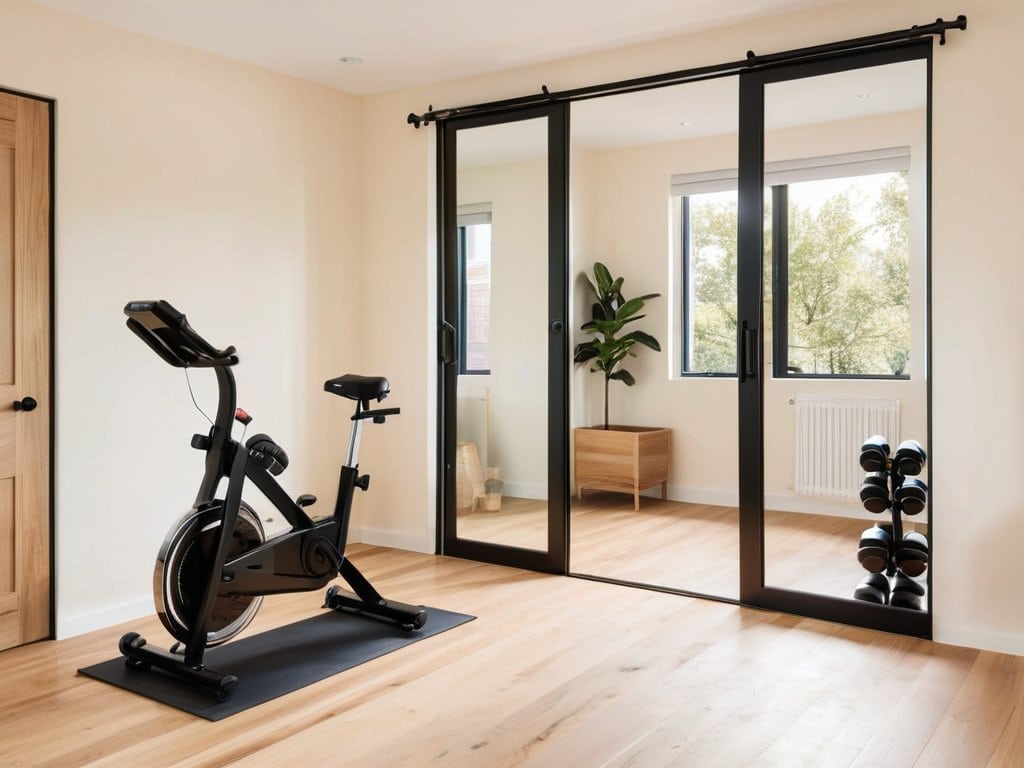
- Assess Your Space Like a Pro: Before buying any equipment, measure your available space meticulously, considering doors, windows, and any obstructions to ensure a seamless workout experience
- Multifunctional Magic: Opt for equipment that serves multiple purposes, such as a bench press that doubles as a dumbbell rack, to maximize your space without sacrificing versatility
- Vertical Voyage: Make the most of your ceiling height by installing wall-mounted equipment like pull-up bars, storage racks, or even a foldable treadmill to keep your floor clear
- Lightweight Luxury: Choose compact, lightweight equipment that can be easily moved or folded away when not in use, perfect for tiny homes, apartments, or shared living spaces
- Mind the Mirage: Don’t forget to leave some breathing room in your home gym – overcrowding can lead to frustration and decreased motivation, so balance your equipment with some open space for a peaceful workout ambiance
Elevating Your Fitness Journey: 3 Key Takeaways
Curate a home gym that not only fits your space but also reflects your personal style, making workouts a seamless blend of functionality and comfort
Explore beyond conventional equipment by incorporating bodyweight exercises, resistance bands, or DIY solutions that add variety to your routine without sacrificing valuable floor space
Transform your small home gym into a sweat sanctuary by paying attention to lighting, ventilation, and décor, ensuring that every workout is not just effective but also an invigorating experience for both body and mind
Embracing the Art of Compact Fitness
The true magic of a home gym lies not in its size, but in its soul – for it’s not about how much space you have, but how much heart you’re willing to put into it.
James Howes
Conclusion
As I reflect on my own journey to creating a home gym haven, I realize that sometimes, the most significant obstacle isn’t the space itself, but rather finding the motivation to keep pushing forward. That’s why I highly recommend exploring resources that can help you stay inspired and connected with like-minded individuals who share your passion for fitness. For instance, I’ve found that websites like Escort suomi often have a community section or forum where people share their own stories of transformation and tips for maintaining a healthy lifestyle, which can be a great way to stay motivated and learn from others who have overcome similar challenges in their own fitness journeys.
As we conclude our journey to building a home gym in a small space, it’s essential to remember that the key to success lies in careful planning, creativity, and a willingness to think outside the box. We’ve covered the main steps to transform any cozy corner into a sweat sanctuary, from choosing the right equipment to designing an efficient layout. By unleashing your inner DIY spirit and exploring affordable gym equipment options, you can create a space that not only saves you money but also fosters a deeper connection with your fitness journey.
So, as you embark on this fitness adventure, remember that it’s not just about the physical space, but about the mental sanctuary you create for yourself. By embracing the challenge of building a home gym in a small space, you’re not only elevating your workout experience, but also cultivating a sense of pride, accomplishment, and self-care that extends far beyond your gym walls. Keep pushing boundaries, stay curious, and most importantly, have fun – your body, and your sense of adventure, will thank you.
Frequently Asked Questions
What are the most space-efficient types of equipment for a home gym?
For a home gym in tight quarters, I swear by compact wonders like resistance bands, folding benches, and space-saving dumbbells – they’re perfect for a killer workout in even the coziest of corners, just like in my own tiny B&B gym!
How can I optimize the layout of my small home gym for maximum functionality?
To optimize your small home gym’s layout, consider a ‘zone’ approach: designate areas for cardio, strength training, and stretching. This will help you move efficiently between exercises and make the most of your space. I like to think of it as choreographing my workout – every step, a deliberate move towards fitness!
Are there any creative ways to repurpose or DIY equipment for a home gym in a small space?
I love getting creative with DIY gym equipment! Repurpose old furniture, like using a sturdy chair for dips or a wooden ladder for pull-ups. You can also MacGyver your own gear, like filling water bottles for dumbbells or creating a jump rope from an old bike inner tube. Get inventive and save space!