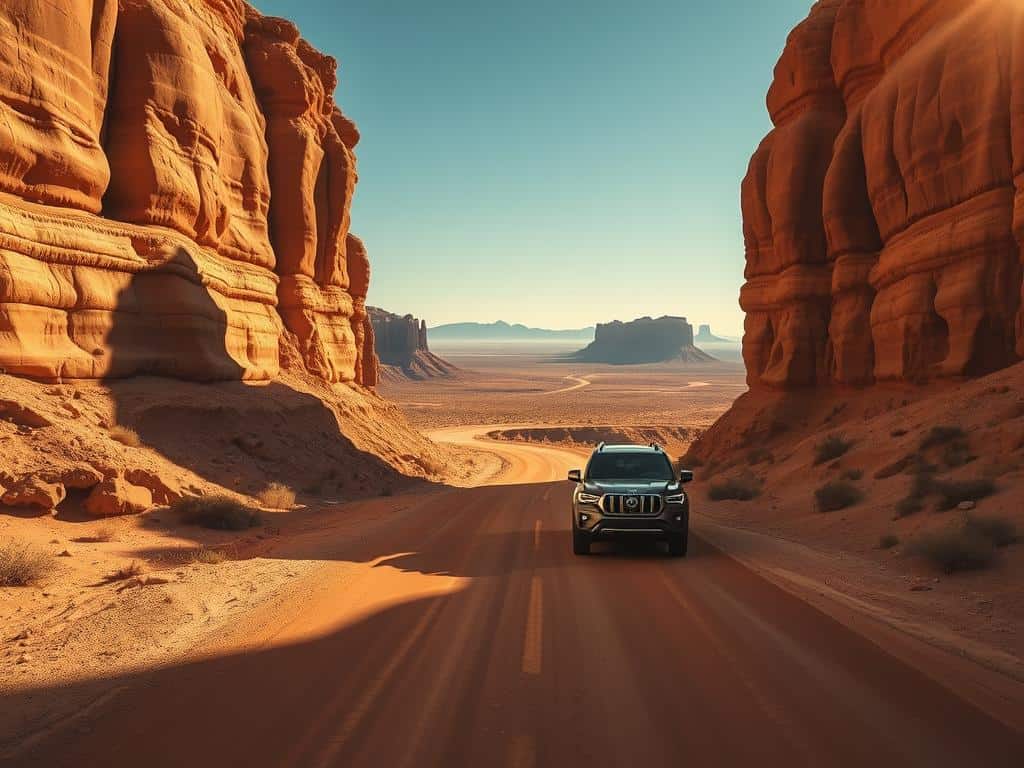
Did you know daytime temperatures in the Arizona desert can hit over 100°F? Nights can drop to freezing. This extreme change is a big challenge for travelers. It shows why you need a good survival guide for desert road trips.
Exploring the vast, sunny desert and its sand dunes can be exciting. But, it’s key to know the desert well for safety and fun. This guide will give you the important tips for traveling safely and enjoying the desert.
I’ll share tips on preparation and survival. This way, you can enjoy your trip and make lasting memories. With the right knowledge, you’ll be ready to take on the desert’s beauty.
Key Takeaways
- Extreme temperature changes require packing for both heat and cold.
- Hydration is critical; aim for 1 gallon of water per person per day.
- Stay informed about local wildlife and foraging options for additional food sources.
- Understand navigation tactics, as technology can fail in remote areas.
- Always share your itinerary with someone to ensure a safe journey.
Preparing for Your Desert Road Trips
Going on Desert Road Trips needs careful planning for safety and fun. A good packing list is key. You should think about the desert’s extreme heat and sudden storms. Having the right survival gear is important for facing these challenges.
Essential Packing Checklist
My desert trip list starts with staying hydrated. I bring at least one gallon of water per person each day. Sunscreen is a must, and I apply it every 1-2 hours to fight off the sun.
I choose lightweight, breathable clothes like long pants and loose shirts. These protect my skin from the sun and keep me cool. I also pack nutrient-rich foods that are light. My emergency kit has first aid, a flashlight, and water purification tablets.
Understanding Desert Conditions
Desert weather can change fast. In places like Nevada, the monsoon season brings quick storms from mid-June to September. Summer temperatures can hit 114°F, so I watch the weather and my surroundings closely.
Knowing which plants are safe to eat and how to navigate naturally helps me stay safe and enjoy my trip.
Survival Gear You Can’t Ignore
For essential gear, I always carry signal mirrors, compasses, and portable water filters. Having physical maps as a backup helps me feel secure in new places. An external phone charger keeps my devices working, even if my car battery dies.
Each item might seem small, but together, they make a big difference in my desert adventure.
Survival Tips for Desert Road Trips
Going on desert road trips needs careful planning and awareness. The stunning views are worth it, but the extreme weather demands attention. Here are some tips to stay safe and healthy on your desert journey.
Staying Hydrated
Water is key on desert trips. I always carry at least one gallon of water per person per day. It’s smart to bring more than you think you’ll need, as dehydration can sneak up fast.
Knowing where to find water, like springs or edible cacti, is helpful. A good plan includes drinking water often and knowing when you’re getting dehydrated.
Dealing with Extreme Temperatures
Deserts are known for their extreme temperatures. Daytime can be over 100 degrees, and the ground can be even hotter. I pack clothes for both hot days and cool nights.
Traveling early in the morning or late in the afternoon helps keep me cool. Wearing light colors and clothes that wick away sweat helps prevent overheating.
Finding Shelter and Navigating
Finding shade is vital in the heat. I look for shaded spots or make a shelter to cool down. Navigation in the desert is tricky.
I learn to navigate by the stars and know how to use the sun. Having a GPS and maps helps me stay safe. Keeping my phone charged is also important for planning my route.
Conclusion
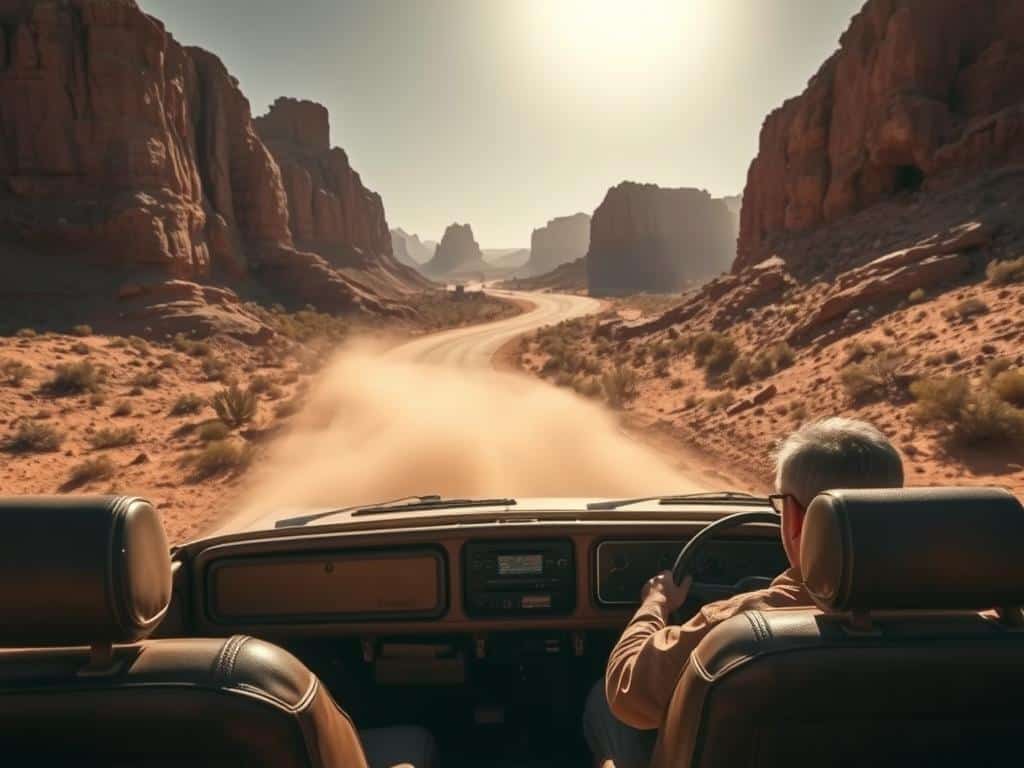
Starting a desert road trip needs careful planning. It’s important to know the unique challenges of the desert. I’ve learned that staying hydrated, managing temperature, and navigating well are key to safety.
Being prepared turns challenges into amazing experiences. I pack lots of water and sun protection because temperatures can hit over 100°F. Exploring places like the Grand Canyon and Joshua Tree National Park, I see the desert’s beauty while staying safe.
It’s all about being ready for adventure. With the right knowledge and gear, I can enjoy every mile. My desert experiences are more than just travel; they’re stories of resilience and adventure.